Most leads are not ready to buy when they first raise a hand. They go quiet, and the deals that close months later go to whoever stayed useful and visible in between. That is the job of lead nurturing: keep prospects warm with relevant touches until the timing is right, instead of blasting them and moving on.
The right tool decides whether that happens automatically and on-brand, or turns into a stack of disconnected emails nobody opens. The category spans all-in-one marketing automation, behavioral journey tools, sales cadence platforms, and LinkedIn engagement, and the best pick depends on where your buyers actually pay attention.
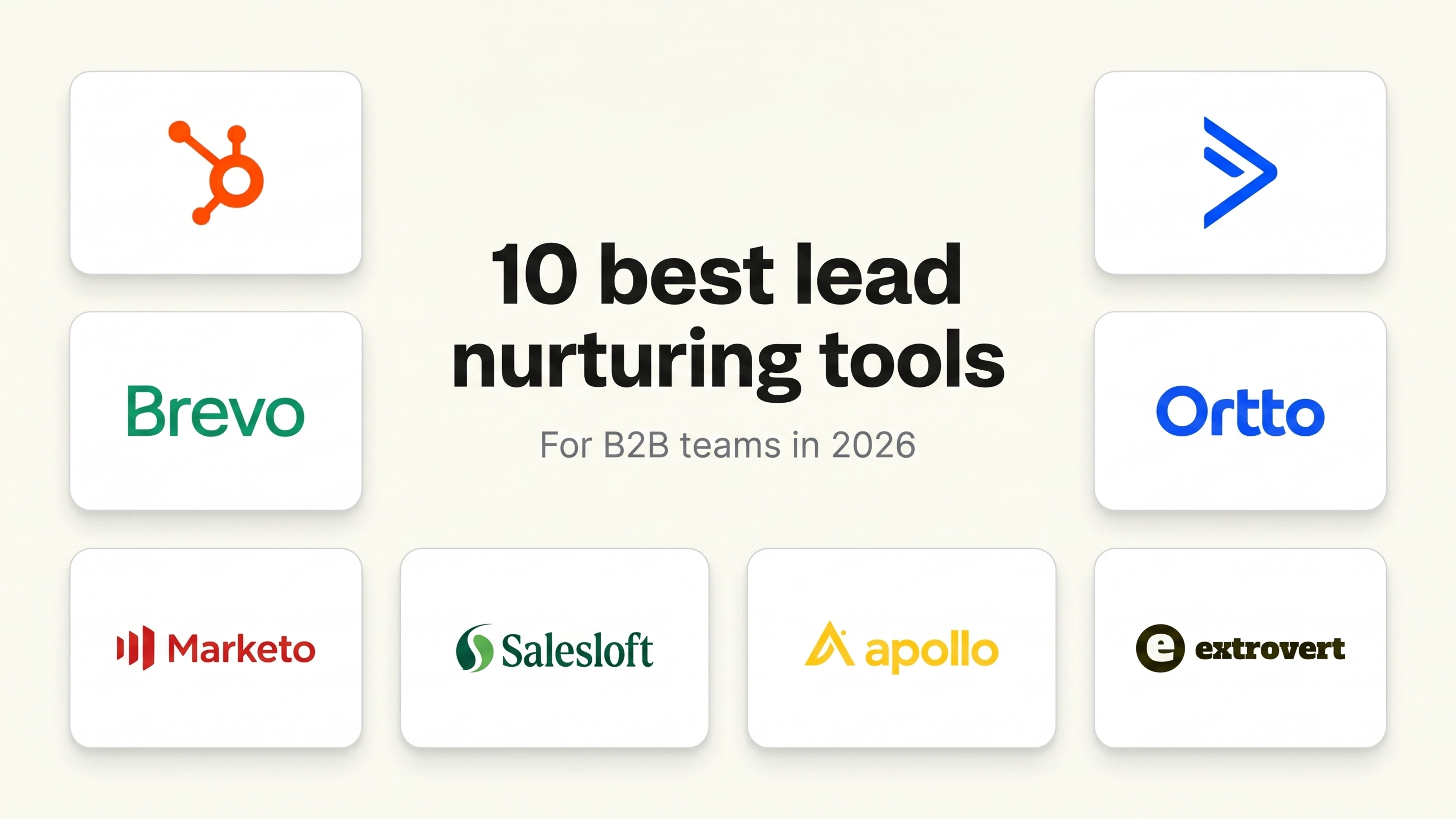
This guide compares the 10 best lead nurturing tools in 2026. For each you get what it does, who it fits, current pricing, and an honest limitation, grouped by job so you can match a tool to your motion rather than the loudest brand.
Best lead nurturing tools: a brief overview
All-in-one marketing automation
- HubSpot Marketing Hub: Best all-in-one for B2B teams that want CRM, email, and workflow nurturing in one place with tight sales alignment.
- ActiveCampaign: Best automation depth for SMBs that want advanced branching and lead scoring without enterprise pricing.
- Brevo: Best budget option for email and SMS nurturing with volume-based pricing.
Behavioral and product-led nurturing
- Customer.io: Best for event-based nurturing where product behavior triggers the next message.
- Encharge: Best for SaaS lifecycle nurturing tied to trials, onboarding, and usage.
- Ortto: Best for combining customer data and journey building in one tool.
Enterprise and sales-led nurturing
- Marketo Engage: Best for enterprise demand gen with complex, multi-touch programs.
- Salesloft: Best for sales-led nurturing through structured rep cadences.
- Apollo.io: Best budget all-in-one combining data, sequencing, and nurture.
LinkedIn engagement-led nurturing
- Extrovert: Best for nurturing prospects on LinkedIn through warm engagement, not just email. Track accounts and topics, then comment and DM from your playbook to stay top of mind.
| Tool | Strength | Pricing | Platforms |
|---|---|---|---|
| HubSpot Marketing Hub | All-in-one CRM, email, and workflow nurturing | Starter from $20/month; Pro $890/month | Web, API |
| ActiveCampaign | Deep automation and lead scoring for SMBs | From $15/month; Plus $49/month | Web, API |
| Brevo | Email and SMS nurturing on volume pricing | Free tier; Business from $18/month | Web, API |
| Customer.io | Event-based behavioral journeys | Usage-based; custom | Web, API |
| Encharge | SaaS lifecycle and onboarding nurturing | From $79/month | Web, API |
| Ortto | Customer data plus journey building | From around $199/month | Web, API |
| Marketo Engage | Enterprise demand-gen programs | Custom; commonly $895+/month | Web, API |
| Salesloft | Structured sales-rep nurture cadences | Custom; around $125-165/user/month | Web, Chrome extension |
| Apollo.io | Data, sequencing, and nurture on a budget | Free tier; from $49/month | Web, Chrome extension, API |
| Extrovert | Warm LinkedIn nurturing via AI comments and DMs | Free trial; from $49/month | Web, Chrome extension |
All-in-one marketing automation tools
1. HubSpot Marketing Hub, best all-in-one for B2B teams
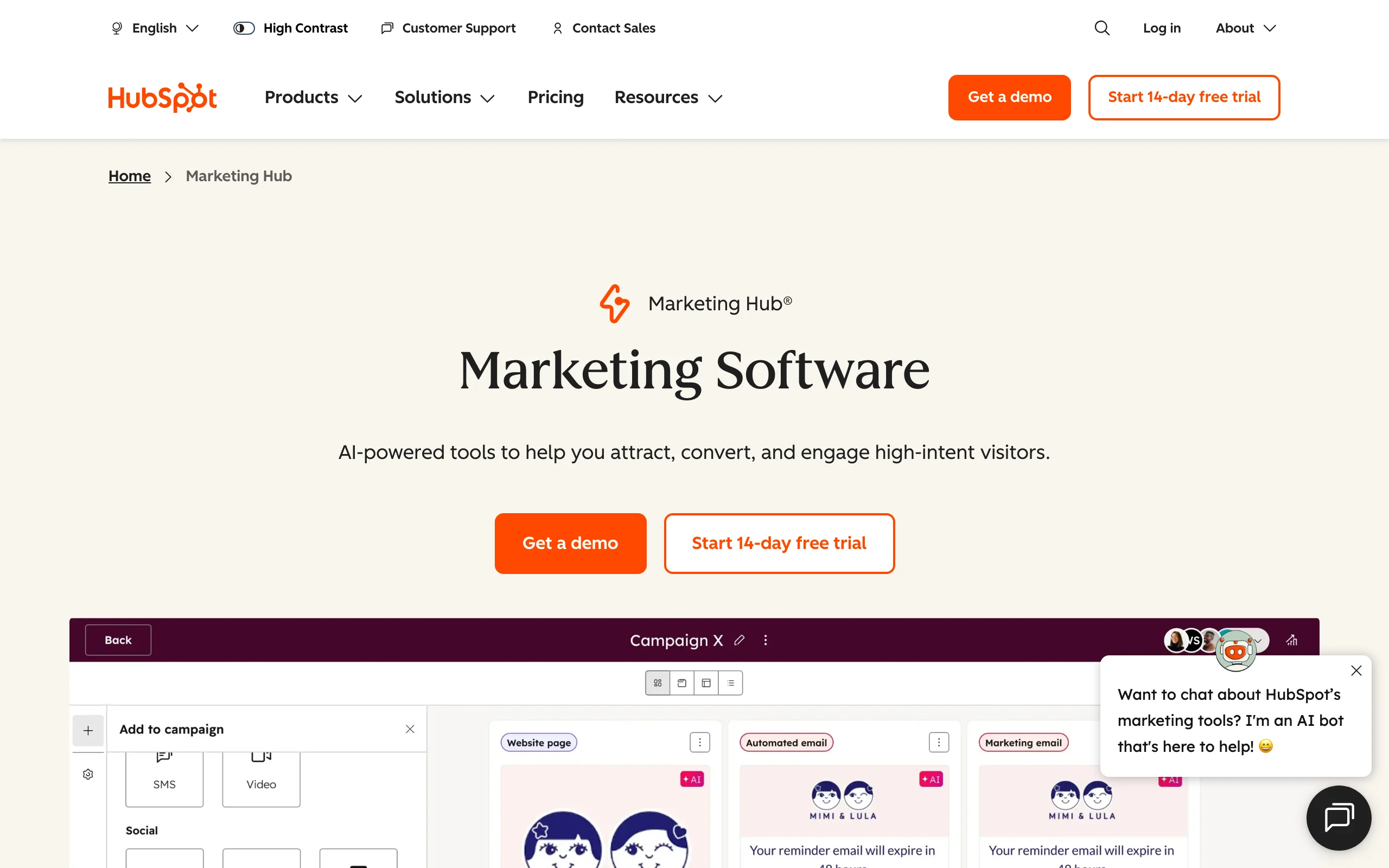
HubSpot Marketing Hub is the default nurturing platform for B2B teams that want everything in one system. Email, landing pages, forms, lead scoring, and workflow automation sit on top of HubSpot's CRM, so sales and marketing share the same contact timeline. That alignment is the real draw: a rep can see every nurture touch a lead received before picking up the phone.
The trade-off is cost at the level where nurturing gets powerful. Starter is cheap, but multi-step workflows live in Professional, which is a steep jump for smaller teams.
Features:
- Visual workflow builder with branching logic
- Lead scoring and lifecycle stages
- Native CRM and sales handoff
- Email, forms, and landing pages
- Reporting across the funnel
Best for:
- B2B teams of 50 to 500 wanting CRM plus automation in one place
- Orgs that need tight sales and marketing alignment
Pricing:
- Starter from $20/month (limited workflows)
- Professional $890/month for full automation
Pros:
- One system for the whole funnel
- Strong sales alignment and reporting
Cons:
- Real nurturing features require the pricey Professional tier
- Contact-based pricing climbs as your database grows
2. ActiveCampaign, best automation depth for SMBs
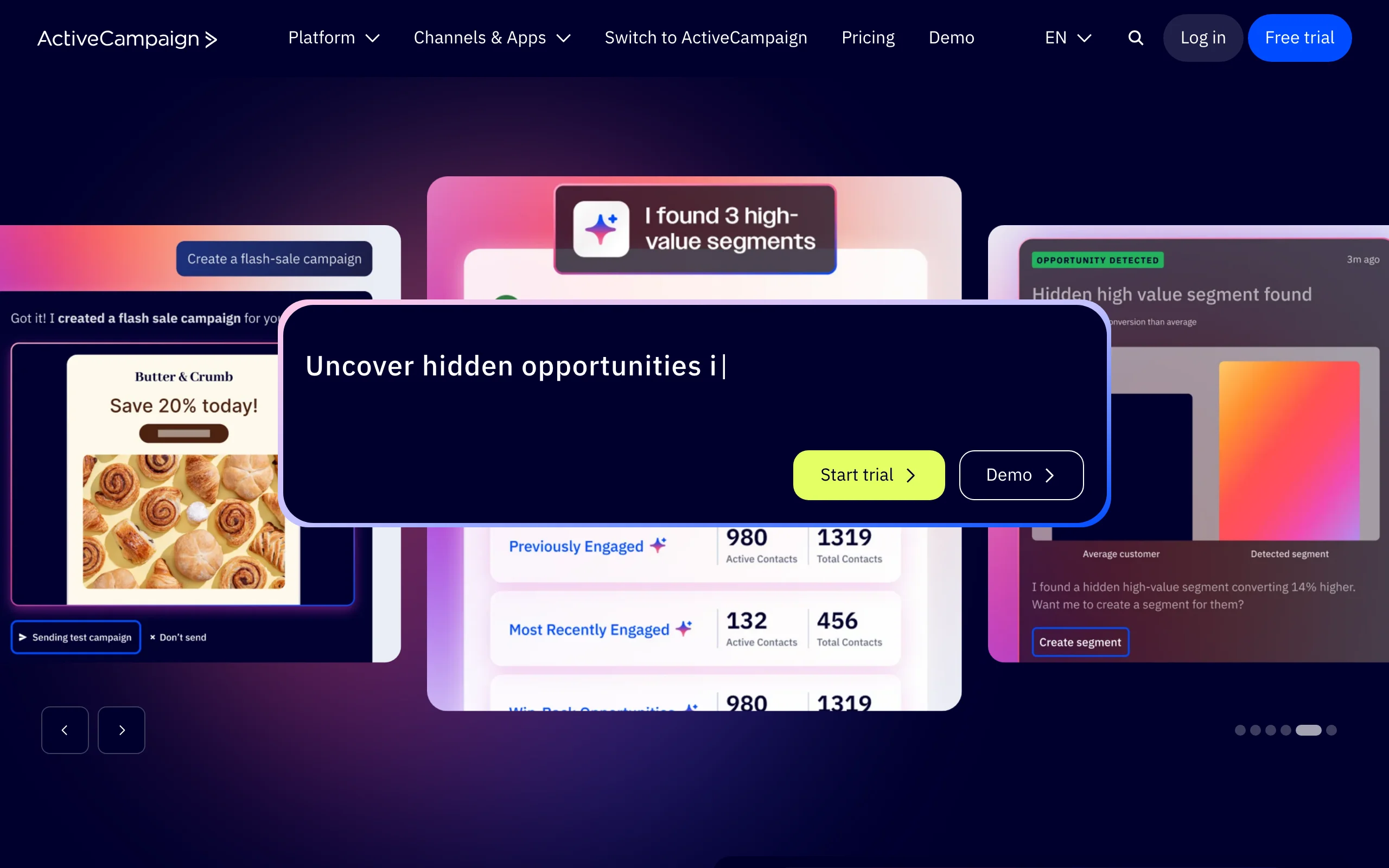
ActiveCampaign packs enterprise-grade automation into SMB pricing. Its strength is the depth of its workflow builder: branching conditions, lead scoring, split tests, and event triggers that rival tools costing far more. For a small team that wants sophisticated nurture logic without a HubSpot contract, it is hard to beat.
It does less well as a full CRM, and the contact-based pricing means costs rise as your list grows. But for pure nurturing automation, it punches above its weight.
Features:
- Advanced multi-branch automations
- Lead scoring and segmentation
- Split testing inside workflows
- Email and basic CRM
- Site and event tracking
Best for:
- SMBs that want deep automation on a budget
- Marketers who live in the workflow builder
Pricing:
- Starter from $15/month
- Plus from $49/month (CRM and scoring)
Pros:
- Powerful automation for the price
- Generous templates and recipes
Cons:
- CRM is lighter than dedicated platforms
- Price scales with contact count
3. Brevo, best budget email and SMS nurturing
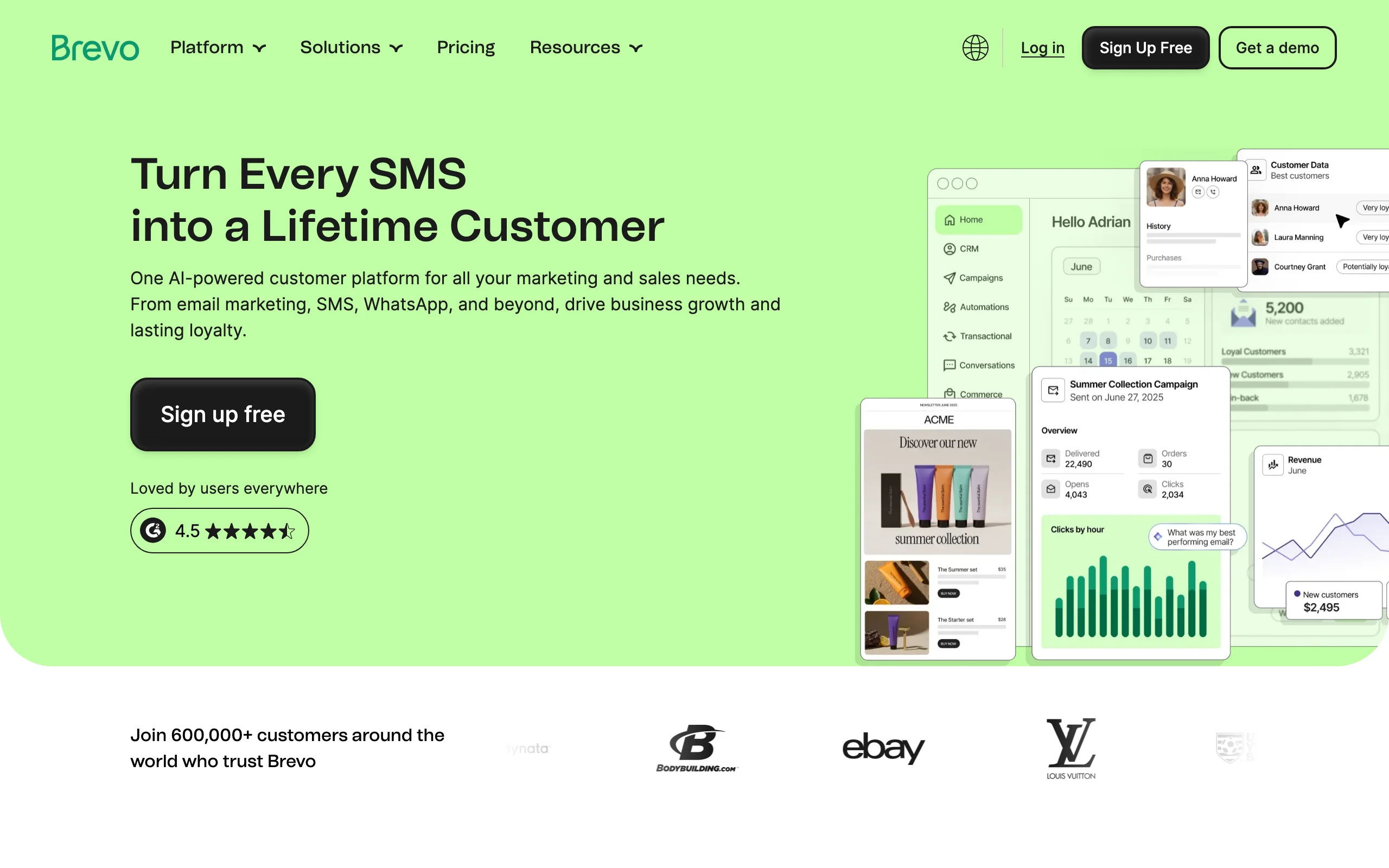
Brevo (formerly Sendinblue) keeps nurturing affordable by charging on email volume rather than contact count, which matters once your database is large. It covers email, SMS, and basic automation, making it a practical pick for small teams that want multichannel nurture without per-contact pricing that punishes list growth.
The automation is simpler than ActiveCampaign or HubSpot, so complex branching programs are harder to build. For straightforward drip and broadcast nurturing, it is one of the cheapest ways in.
Features:
- Volume-based pricing, not per contact
- Email and SMS in one tool
- Basic automation workflows
- Transactional email support
- Free tier with send limits
Best for:
- Small teams with large contact lists
- Multichannel nurture on a tight budget
Pricing:
- Free tier with daily send limits
- Business from around $18/month by volume
Pros:
- Cheap as your list grows
- Email and SMS together
Cons:
- Lighter automation logic
- Fewer B2B-specific features
Behavioral and product-led nurturing tools
4. Customer.io, best event-based behavioral nurturing
Customer.io triggers nurturing off what people actually do, not just who they are. It ingests product and behavioral events, so a message fires when a user hits a feature, abandons a step, or crosses a usage threshold. For product-led companies, that behavioral precision turns nurturing from scheduled drips into timely, relevant nudges.
It expects engineering involvement to instrument events, which is the price of its power. Teams without that data plumbing will underuse it.
Features:
- Event and behavior-triggered messaging
- Email, push, SMS, and in-app
- Granular segmentation on product data
- Powerful workflow logic
- API-first design
Best for:
- SaaS and product-led growth companies
- Teams where engineers own event tracking
Pricing:
- Usage and volume-based
- Custom plans for scale
Pros:
- Precise behavioral targeting
- True multichannel reach
Cons:
- Needs engineering to instrument events
- Overkill for simple email nurture
5. Encharge, best for SaaS lifecycle nurturing
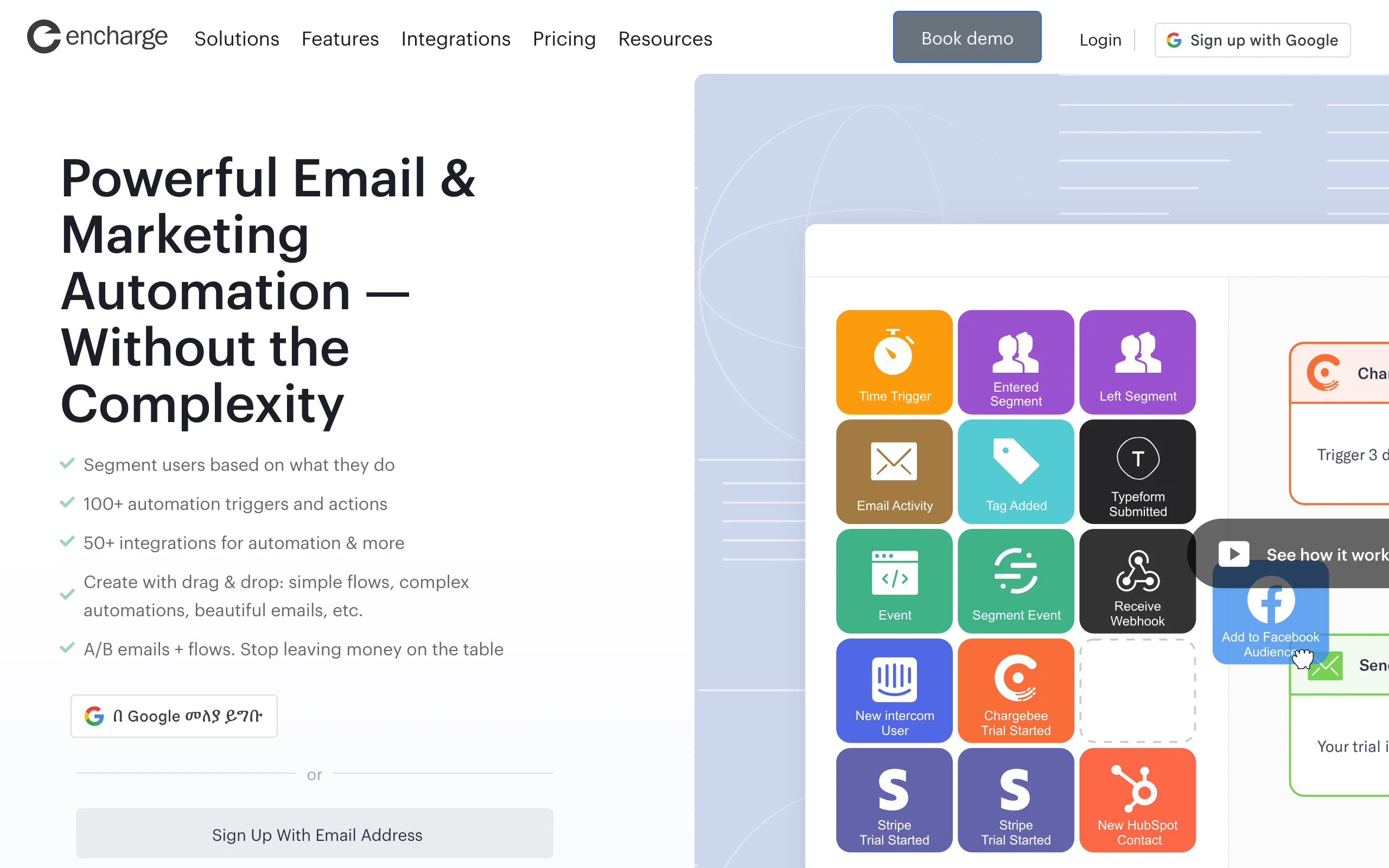
Encharge focuses on the SaaS lifecycle: trials, onboarding, activation, and expansion. Its visual flow builder maps cleanly to product-led journeys, and it syncs with CRMs and Stripe so revenue and usage events can drive the next nurture step. For a SaaS team that wants behavioral nurturing without Customer.io's engineering overhead, it sits in a useful middle ground.
It is less suited to broad B2B demand gen or large-scale broadcast, where the all-in-one platforms do more.
Features:
- Visual flow builder for lifecycle journeys
- CRM and Stripe automation
- Behavior-based triggers
- Lead scoring
- AI-assisted content
Best for:
- SaaS teams nurturing trials and onboarding
- Product-led motions tied to usage and billing
Pricing:
- From $79/month
- Higher tiers by contact volume
Pros:
- Built for SaaS lifecycle
- Easier than fully event-based tools
Cons:
- Narrower than all-in-one platforms
- Smaller ecosystem
6. Ortto, best for data plus journeys
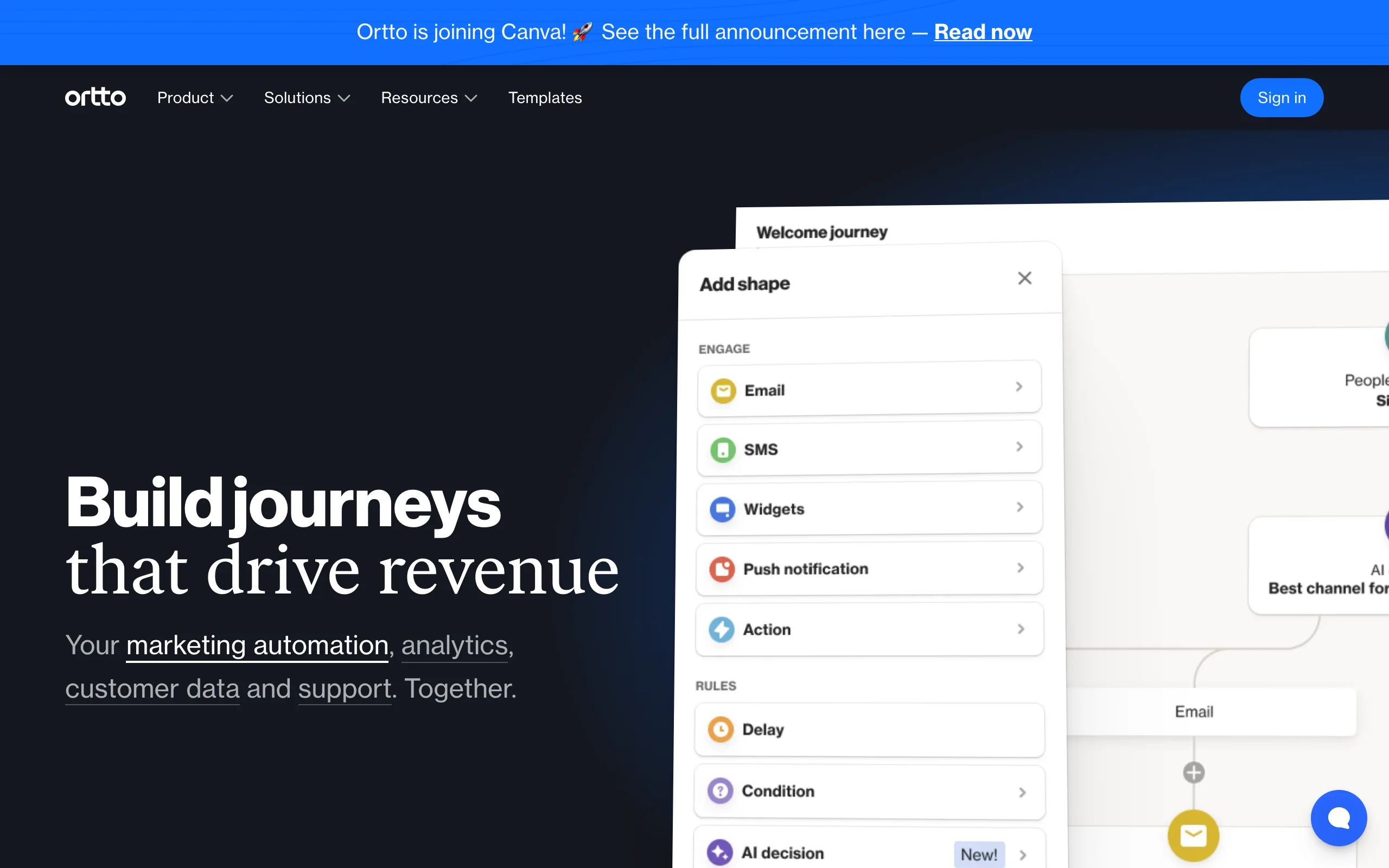
Ortto combines a customer data platform with journey building, so segmentation and nurturing live in the same tool. You can unify behavioral and profile data, then build automated journeys across email, SMS, and push off that single source. For teams tired of stitching a CDP to a separate automation tool, that consolidation is the appeal.
Pricing starts higher than entry email tools, so it fits teams that genuinely need the data layer, not those that just want drip campaigns.
Features:
- Built-in customer data platform
- Visual journey builder
- Email, SMS, and push
- Analytics and dashboards
- Predictive analytics
Best for:
- Teams wanting data and journeys in one tool
- SaaS and ecommerce with rich behavioral data
Pricing:
- From around $199/month for 5,000 contacts
- Lower on annual billing
Pros:
- Data and automation unified
- Strong analytics
Cons:
- Higher entry price
- More than simple nurture needs
Enterprise and sales-led nurturing tools
7. Marketo Engage, best for enterprise demand gen
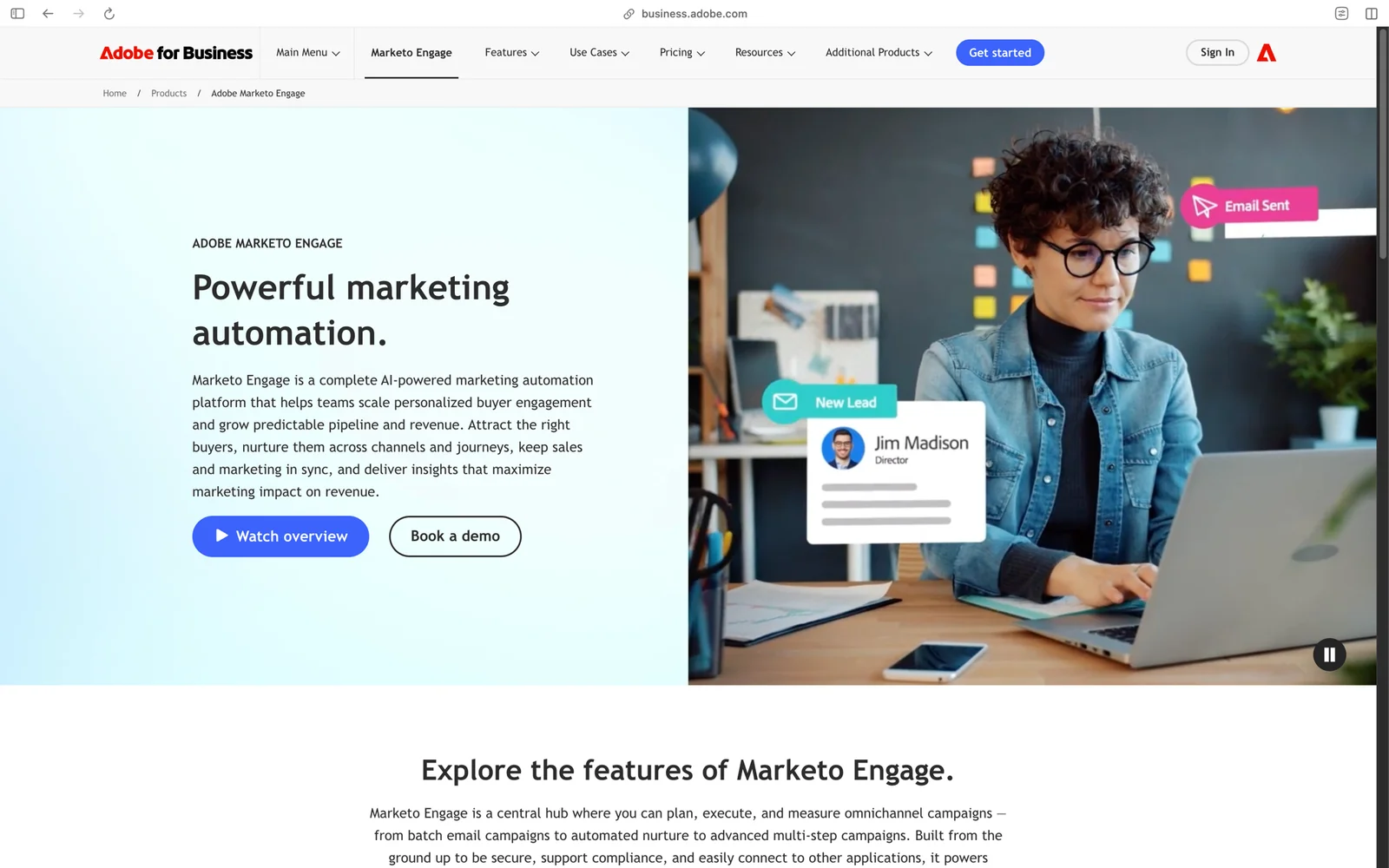
Marketo Engage (Adobe) is built for enterprise marketing teams running complex, multi-touch nurture programs across large databases. Its strength is depth: sophisticated lead scoring, account-based programs, and the flexibility to model detailed buyer journeys. Large demand-gen teams choose it precisely because it handles complexity other tools cannot.
That power comes with cost and complexity. Pricing is custom and steep, and the platform needs dedicated operators to run well.
Features:
- Advanced lead scoring and nurturing
- Account-based marketing programs
- Deep segmentation and personalization
- Revenue attribution
- Broad enterprise integrations
Best for:
- Enterprise demand-gen teams
- Complex, large-scale nurture programs
Pricing:
- Custom, quote-based
- Commonly $895/month and up by tier
Pros:
- Handles real complexity at scale
- Strong attribution and ABM
Cons:
- Expensive and complex to operate
- Needs dedicated marketing ops
8. Salesloft, best for sales-led nurturing
Salesloft nurtures through structured sales cadences rather than marketing automation. Reps run multi-step sequences of emails, calls, and social touches, with the platform tracking engagement and surfacing who to prioritize. For sales-led orgs where reps own the nurture relationship, it keeps follow-up consistent instead of leaving it to memory.
It is a sales engagement platform, not a marketing automation tool, so it nurtures known prospects in a pipeline rather than running large top-of-funnel programs.
Features:
- Multi-step rep cadences
- Email, call, and social steps
- Engagement tracking and analytics
- CRM sync
- Conversation intelligence add-ons
Best for:
- Sales teams nurturing active pipeline
- Orgs where reps own follow-up
Pricing:
- Custom, per user
- Around $125 to $165/user/month
Pros:
- Keeps rep follow-up consistent
- Strong engagement visibility
Cons:
- Per-user cost adds up
- Not a marketing automation platform
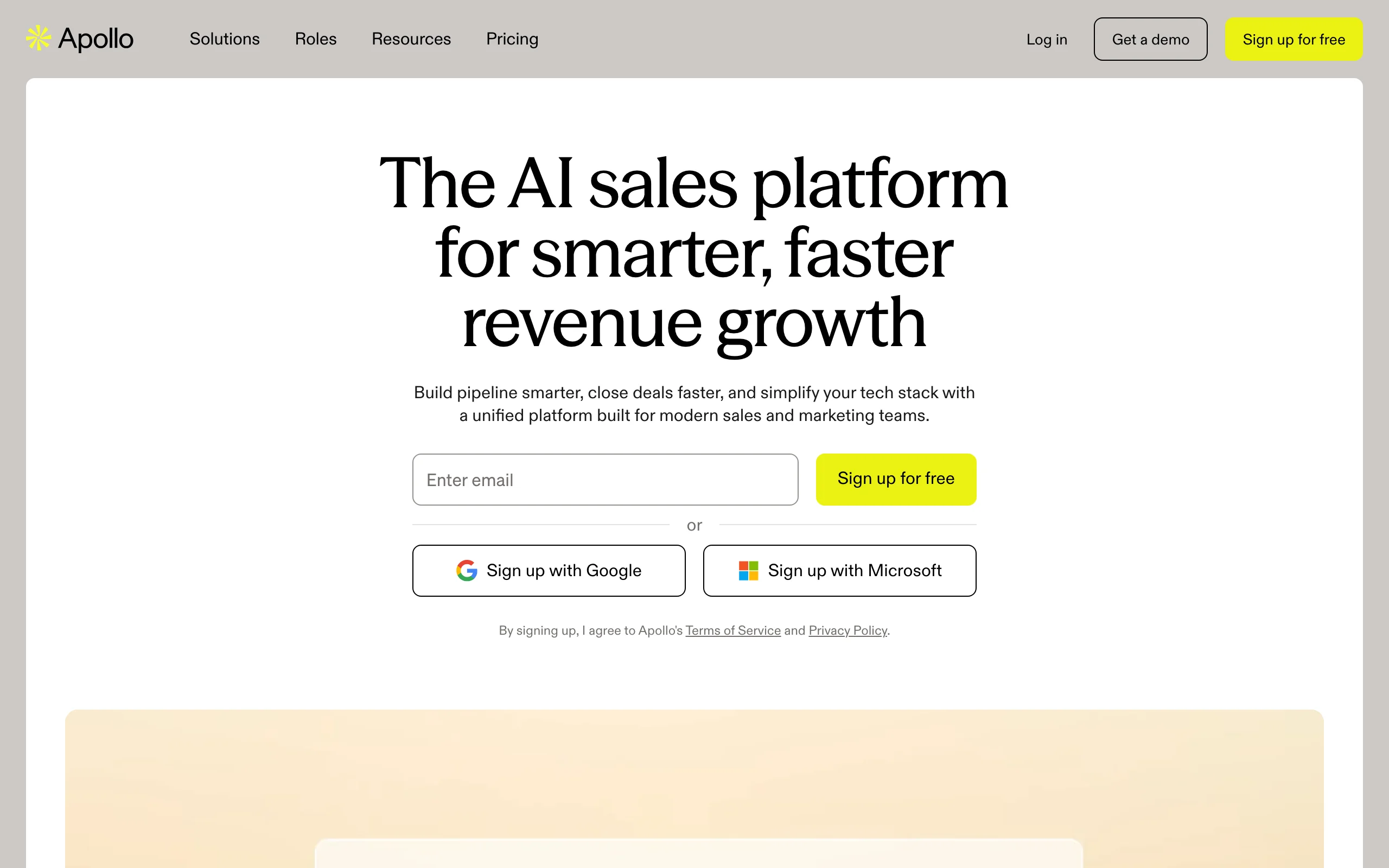
9. Apollo.io, best budget all-in-one
Apollo.io bundles a large contact database with sequencing and basic nurture, so teams can prospect and follow up in one affordable tool. For smaller B2B teams that want data plus outreach without separate subscriptions, it covers a lot of ground cheaply, including a usable free tier.
Its nurturing is sequence-based rather than the rich behavioral automation of dedicated platforms, so it fits sales-led follow-up more than sophisticated marketing journeys.
Features:
- 275M+ contact database
- Email sequencing and dialer
- Basic CRM and pipeline
- AI writing assists
- Chrome extension and API
Best for:
- SMB B2B teams wanting data plus follow-up
- Sales-led nurture on a budget
Pricing:
- Free tier available
- Paid from around $49/month
Pros:
- Affordable and broad
- Data and sending together
Cons:
- Sequence-based, not behavioral journeys
- Data accuracy varies by segment
LinkedIn engagement-led nurturing
10. Extrovert, best for warm LinkedIn nurturing
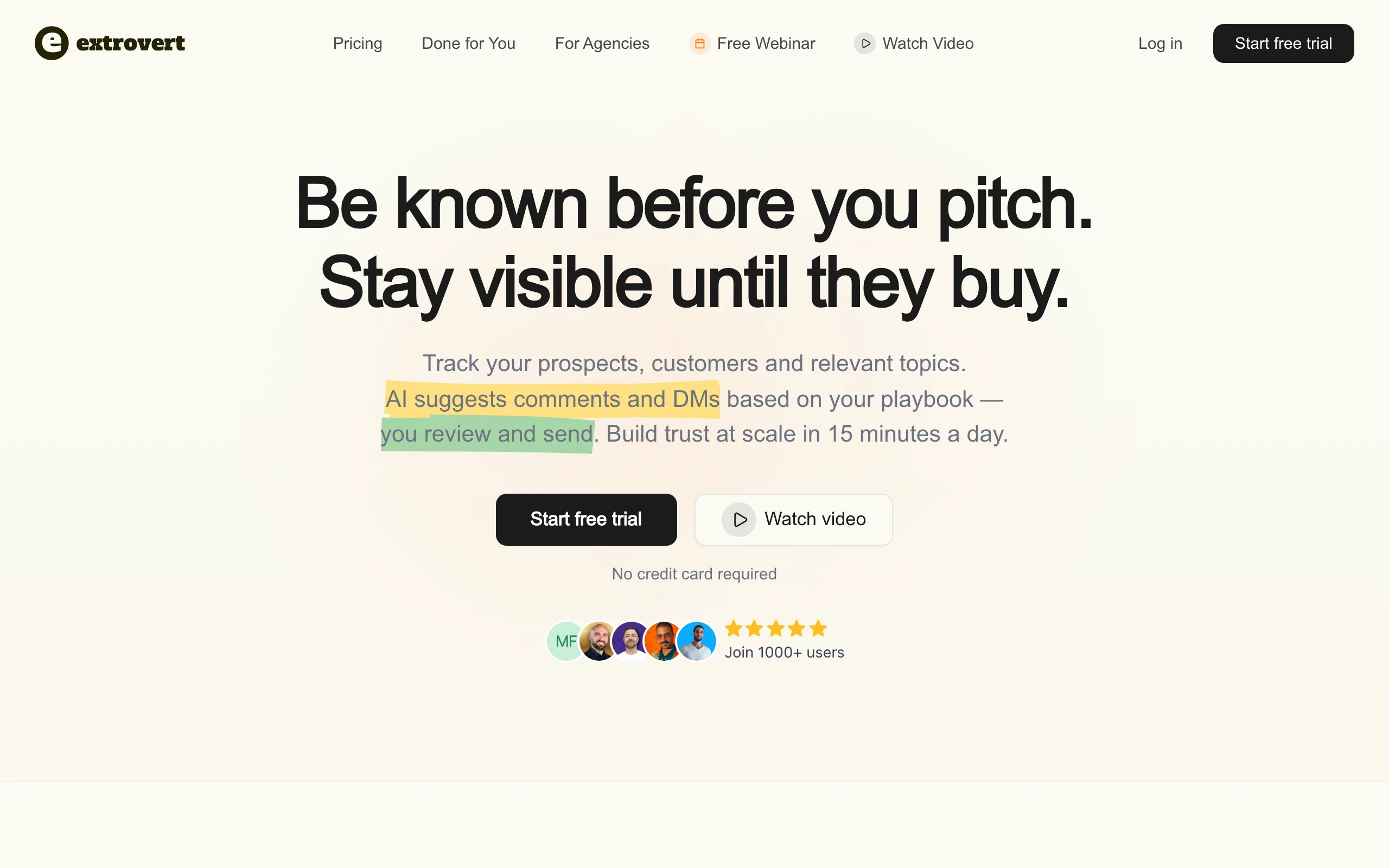
Most nurturing tools live in the inbox, where reply rates keep falling. Extrovert nurtures where B2B buyers actually pay attention now: LinkedIn. Extrovert skips the drip email entirely. You track your prospects, customers, and relevant topics, and Extrovert's AI suggests on-brand comments and DMs from your own playbook. You stay visible in the feed, so a lead who is not ready to buy still sees your name in a helpful context week after week.
The workflow takes about 15 minutes a day, and over what Extrovert calls the 90-day loop, those touches compound into familiarity that warm outreach converts on. Every action is human-approved, so nothing posts unattended, which avoids the flagging risk that comes with automated sending. It is not a marketing automation platform and it does not send email sequences. It is the layer that keeps you present on LinkedIn while your other tools handle the inbox.
Features:
- Prospect, customer, and topic tracking on LinkedIn
- AI comment and DM suggestions in your voice
- Buying-signal and champion-change alerts
- Human-in-the-loop approval on every action
- About 15 minutes a day to run
Best for:
- SDRs, AEs, and founders nurturing on LinkedIn for SDRs
- Teams whose buyers engage more on LinkedIn than email
Pricing:
- Free trial available
- Paid plans from $49/month, see Extrovert pricing
Pros:
- Nurtures on the channel where buyers are active
- Every action is human-reviewed before it goes out, avoiding unattended automation
Cons:
- LinkedIn-focused, not an email or marketing automation tool
- Built for steady daily reps, not one-off broadcast sends
How to choose the best lead nurturing tool for your needs
The right lead nurturing tool depends on where your buyers engage, how complex your programs are, and who owns the relationship. Run a two-week pilot on a real segment before committing, and compare total cost as your contact list grows, not just the entry price.
Where do your buyers actually engage?
If your audience lives in the inbox, an automation platform like HubSpot or ActiveCampaign carries the load. If they engage more on LinkedIn, email-only nurturing misses them, which is where warm outreach through Extrovert keeps you visible. Most B2B teams need both: automated email plus a human presence where buyers scroll.
How complex are your nurture programs?
Simple drip and broadcast nurture runs cheaply on Brevo or Apollo. Behavioral, product-triggered journeys need Customer.io or Encharge. Enterprise, multi-touch demand gen across a large database justifies Marketo. Match the tool to the complexity you will actually use, not the ceiling you might reach.
Who owns the nurturing, marketing or sales?
Marketing-owned nurturing favors automation platforms with scoring and journeys. Sales-owned follow-up favors cadence tools like Salesloft or a relationship layer like Extrovert. If reps and marketers both touch the lead, prioritize a tool that shares one timeline, which is HubSpot's core advantage.
What does it cost as you grow?
Most contact-based tools get more expensive as your database grows, while volume-based Brevo stays flat. Per-user tools like Salesloft scale with headcount. Model the cost at next year's list size, and remember the human time each tool still requires. For teams pairing automated nurture with autonomous outbound, compare notes with these AI BDR tools and broader B2B prospecting tools before locking in a stack.
FAQ
What are lead nurturing tools?
Lead nurturing tools are software that keeps prospects engaged with relevant, timed touches until they are ready to buy. They span marketing automation platforms, behavioral journey tools, sales cadence software, and LinkedIn engagement tools, automating follow-up so leads stay warm instead of going cold after the first contact.
What is the best lead nurturing tool for B2B?
For most B2B teams, HubSpot Marketing Hub is the strongest all-in-one because it unifies CRM, email, and workflow nurturing with sales alignment. Teams on a budget get most of the value from ActiveCampaign, and teams nurturing on LinkedIn add an engagement layer like Extrovert. The best choice depends on where your buyers engage and how complex your programs are.
How much do lead nurturing tools cost?
Lead nurturing tools range from free tiers and around $15 to $49/month for SMB email automation, up to $890/month for HubSpot Professional and custom five-figure contracts for Marketo. Most contact-based tools get more expensive as your database grows, so model the cost at your projected list size.
Can I nurture leads on LinkedIn instead of email?
Yes, and increasingly you should, because email reply rates keep falling while B2B buyers stay active on LinkedIn. Tools like Extrovert nurture by keeping you visible through comments and DMs from your playbook, so prospects see you in a helpful context before you pitch. Many teams pair LinkedIn nurturing with email automation rather than choosing one.
What is the difference between lead nurturing and lead generation?
Lead generation attracts and captures new prospects, while lead nurturing keeps the prospects you already have engaged until they are ready to buy. Generation fills the top of the funnel; nurturing moves leads through it. Strong teams invest in both, since unworked leads go cold and wasted generation spend.
Do lead nurturing tools work without a big team?
Yes, several are built for small teams. ActiveCampaign, Brevo, and Apollo offer sophisticated nurturing at SMB prices, and a LinkedIn layer like Extrovert runs in about 15 minutes a day. The key is matching the tool's complexity to what you will actually operate, since powerful platforms like Marketo need dedicated staff to run well.
How do I keep nurturing from feeling spammy?
Lead with relevance and engagement instead of volume. Trigger messages off real behavior or genuine context, space them sensibly, and give the prospect something useful each touch rather than another pitch. Warming a lead through helpful LinkedIn engagement before any ask, the approach behind engagement-led social selling, keeps nurturing human and lifts replies.
Sources: HubSpot: Best Lead Nurturing Tools, Digital Applied: Marketing Automation Comparison 2026, Landbase: Salesloft Pricing 2026