Cold email reply rates dropped to 3.43% in 2026, and a crowded market of AI BDR tools is selling the cure: software that prospects, writes, sends, and books meetings without a rep touching it. Some of these agents genuinely save hours on research and list building. Others just automate the same low-effort outreach that buried inbox reply rates in the first place.
Picking the right one decides whether you save your reps real time or quietly torch your domain reputation. The tools differ on how autonomous they are, which channels they touch, how they handle deliverability, and how much they cost, and those differences matter more than the marketing suggests.
This guide compares the 10 best AI BDR tools in 2026. For each you get what it does, who it fits, current pricing, and an honest limitation, plus a framework for choosing and a note on where full automation is the wrong call.
Best AI BDR tools: a brief overview
Fully autonomous agents
- Artisan (Ava): Best for teams that want one agent running multichannel outbound end to end. Heavily marketed, broad feature set, but lost LinkedIn as a channel in early 2026.
- 11x (Alice): Best for enterprise teams buying a digital worker with hands-on implementation. Custom pricing and a high floor.
- AiSDR: Best for SMBs that want autonomous email and LinkedIn outreach live fast. Quick setup, mid-market pricing.
- Salesforge (Agent Frank): Best for deliverability-first email outbound at volume. Built around inbox rotation and warmup.
AI-plus-human platforms
If full autonomy feels like too much risk for your domain or your brand, Extrovert is the strongest human-in-the-loop pick for LinkedIn-specific engagement, because every comment and DM is a draft you approve, not an unattended send. Here's how it compares to the other AI-plus-human platforms.
- Amplemarket (Duo): Best for teams that want AI woven into a full data and outreach platform: trades Extrovert's LinkedIn-only focus for a broader multichannel stack, still with a human steering.
- Extrovert: Best for warm, human-reviewed LinkedIn engagement. Suggests on-brand comments and DMs from your playbook so you build familiarity before you pitch, and nothing sends without your approval.
- Apollo.io: Best all-in-one for teams that want a database and sequencing on a budget: trades Extrovert's warm LinkedIn-only workflow for broad, affordable data plus AI assists.
Build-your-own and specialist agents
- Clay (Claygent): Best for ops teams building custom AI research and enrichment workflows. Not a turnkey SDR.
- Relevance AI: Best for teams that want to design their own AI agents low-code across sales and ops.
- Qualified (Piper): Best for inbound: an AI SDR that qualifies and books website visitors in real time.
| Tool | Key strength | Pricing | Platforms |
|---|---|---|---|
| Artisan (Ava) | Autonomous multichannel outbound in one agent | From $250/month (annual) | Web |
| 11x (Alice) | Enterprise digital worker with implementation | Custom; commonly five figures/year | Web, API |
| AiSDR | Fast-to-launch autonomous email and LinkedIn | From $900/month | Web |
| Salesforge (Agent Frank) | Deliverability-first email outbound at scale | From $499/month | Web |
| Amplemarket (Duo) | AI plus human inside a full data platform | From $600/month (annual) | Web, Chrome extension |
| Extrovert | Human-reviewed AI comments and DMs for LinkedIn | Free trial; from $49/month | Web, Chrome extension |
| Apollo.io | Database, sequencing, and AI on a budget | Free tier; from $49/month | Web, Chrome extension, API |
| Clay (Claygent) | Custom AI research and enrichment workflows | From $149/month | Web, API |
| Relevance AI | Low-code platform to build your own agents | Free tier; from $349/month | Web, API |
| Qualified (Piper) | Inbound AI SDR that books website visitors | Sales-led; third-party estimates from ~$40k/year | Web |
1. Artisan (Ava), best for autonomous multichannel outbound
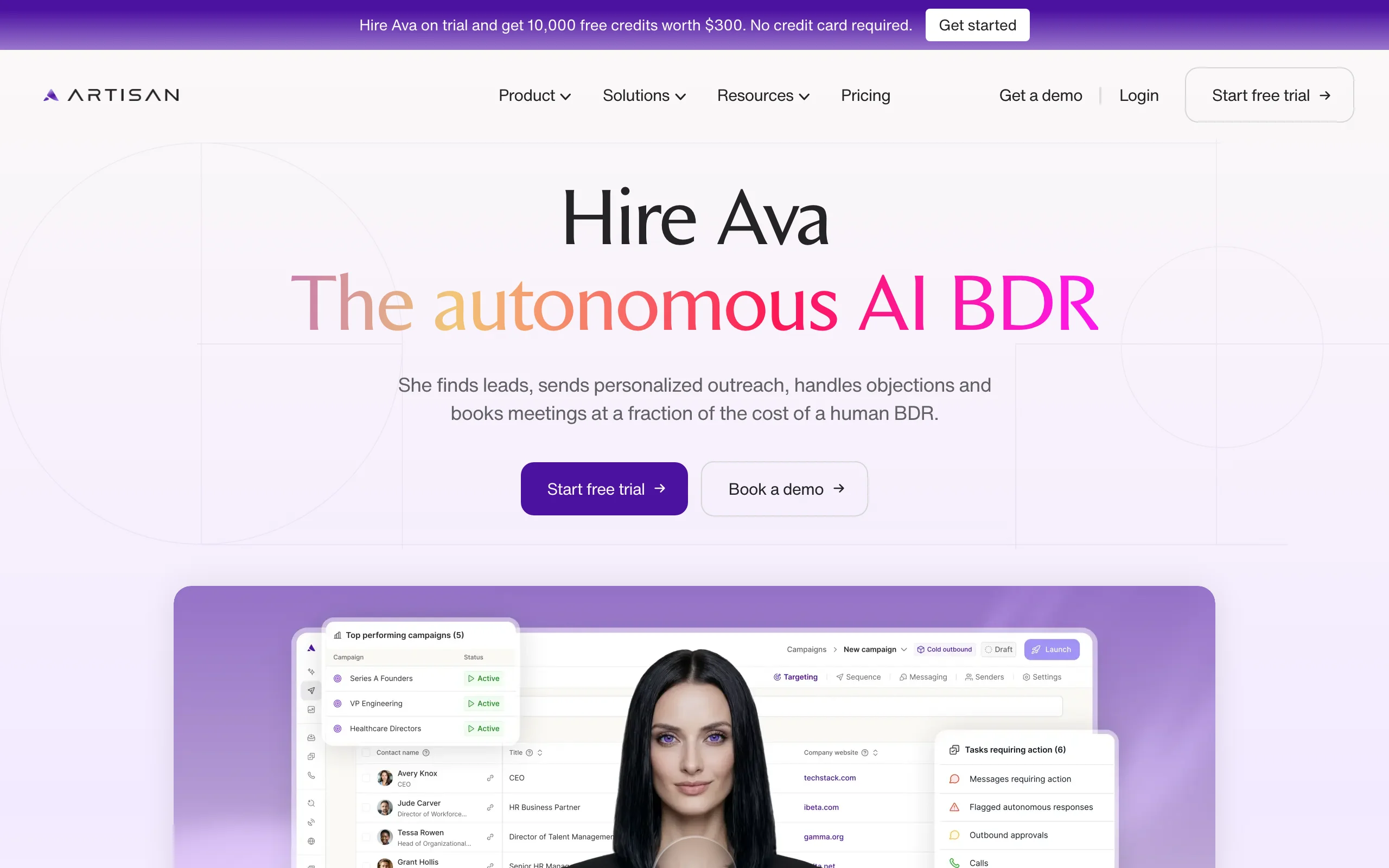
Artisan markets Ava as a near-complete replacement for a human BDR. You define your ICP, and Ava sources prospects, researches them, writes personalized messages, and runs sequences, aiming to take the entire top of funnel off your reps' plates. It is one of the most visible AI BDR products in the market, with a polished interface and a broad feature set.
The catch arrived in early 2026, when LinkedIn restricted Artisan's automated outreach, removing a core channel from what was sold as a multichannel agent. That leaves email carrying more of the load, which puts pressure on deliverability.
Key features:
- Autonomous prospecting against a defined ICP
- Model-written personalization from scraped public data
- Email sequencing with follow-up handling
- Built-in data and enrichment
- Reply detection and meeting booking
Best for:
- Teams that want a single agent owning outbound end to end
- Outbound-heavy orgs comfortable with email as the primary channel
Pricing:
- Intern plan from $250/month billed annually
- Employee plan around $600/month billed annually
- Enterprise: custom
Pros:
- Broad, genuinely autonomous feature set
- Strong onboarding and UI
Cons:
- Lost LinkedIn as an automated channel in 2026
- Fully automated sending raises spam-flag and reputation risk
2. 11x (Alice), best for enterprise digital workers
11x positions Alice as a digital worker rather than a tool: an autonomous AI SDR that runs research, outreach, and follow-up across channels for larger go-to-market teams. It leans into the "AI employee" framing, with implementation support and configuration tuned to your motion rather than a self-serve signup.
That enterprise posture shows up in the price. 11x uses custom pricing based on volume, team size, and automation scope, and contracts commonly land in the five figures per year. It fits teams that want a managed rollout, not solo founders testing the waters.
Key features:
- Autonomous multichannel outreach
- ICP-based prospecting and enrichment
- Sequencing with reply handling
- Hands-on implementation and configuration
- Reporting tuned to enterprise GTM
Best for:
- Mid-market and enterprise teams with budget for a managed agent
- Orgs replacing or augmenting a full SDR function
Pricing:
- Custom, quote-based
- Commonly five figures per year at scale
Pros:
- Strong implementation and support
- Built for volume and complex GTM motions
Cons:
- High price floor, not self-serve
- Same autonomous-sending deliverability risks as peers
3. AiSDR, best for fast-to-launch autonomous outreach
AiSDR is built to get an autonomous email and LinkedIn motion running quickly. You connect your data and mailboxes, define your targeting, and it drafts and sends personalized outreach, then manages replies and follow-ups. It targets SMB and mid-market teams that want autonomy without a long enterprise implementation.
The trade-off is cost relative to volume. Entry pricing starts higher than self-serve sequencing tools, and the value depends on how much of the work you genuinely hand over versus reviewing.
Key features:
- Autonomous email and LinkedIn outreach
- Personalization from prospect data and signals
- Follow-up sequencing and reply handling
- Fast onboarding
- Meeting booking
Best for:
- SMB and mid-market teams wanting autonomy live fast
- Outbound motions weighted toward email
Pricing:
- Explore plan from around $900/month
- Grow plan from around $2,500/month, billed quarterly
Pros:
- Quick setup and launch
- Combines email and LinkedIn steps
Cons:
- Higher entry price than basic sequencing tools
- Autonomous sending still carries spam-flag exposure
4. Salesforge (Agent Frank), best for deliverability-first email
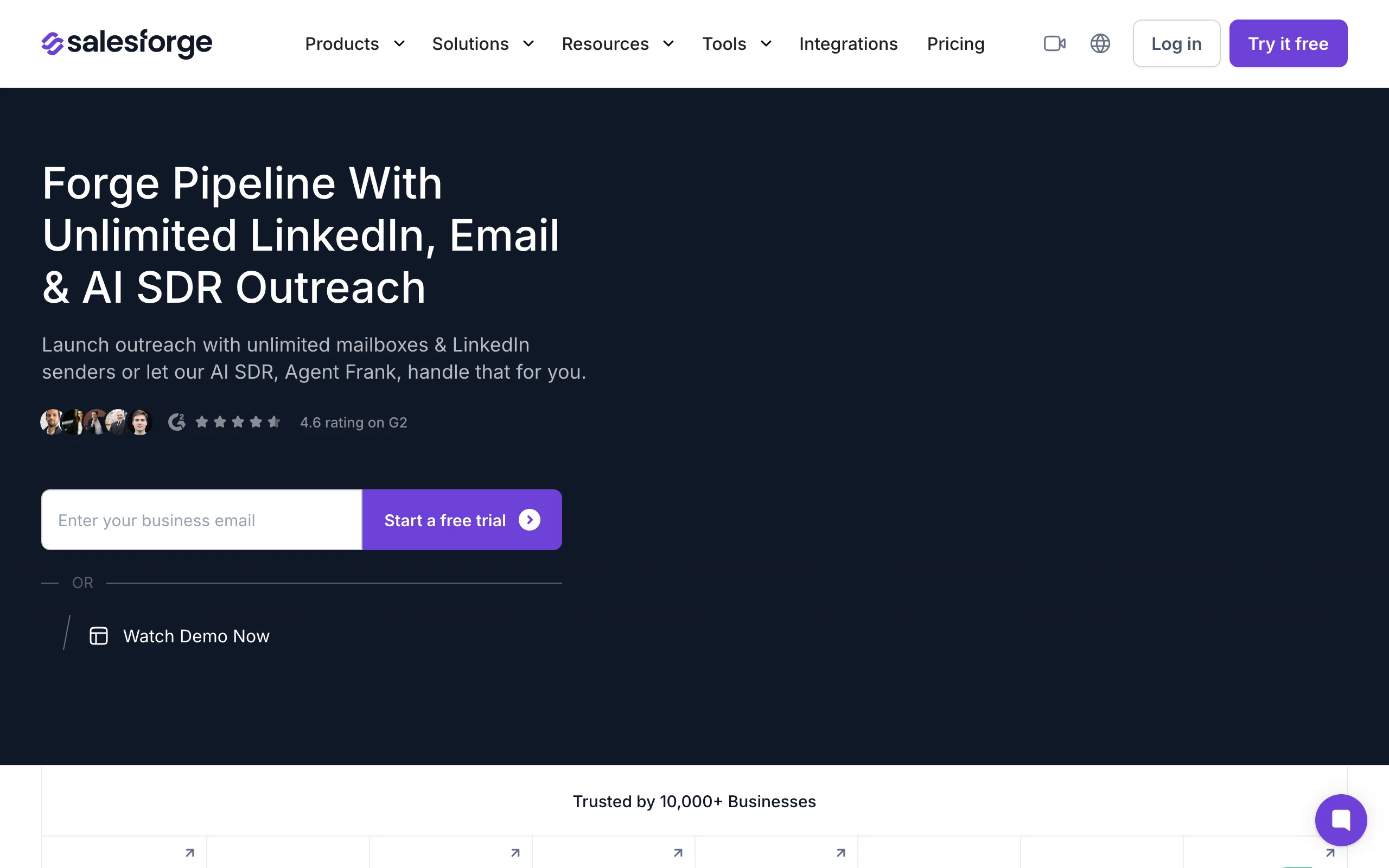
Salesforge built Agent Frank around the part of cold email that actually decides results: getting into the inbox. You connect mailboxes, define your ICP, and Frank handles list building, sending, and follow-ups, with the platform's infrastructure focused on mailbox rotation, warmup, and deliverability.
For high-volume email teams, that focus is the differentiator. It is less suited to teams that want LinkedIn-led or relationship-led outreach, since the core motion is email at scale.
Key features:
- Autonomous email outbound with list building
- Mailbox rotation and warmup infrastructure
- Deliverability-focused sending
- Follow-up sequencing
- Meeting booking on your calendar
Best for:
- High-volume cold email teams
- Agencies running outbound across many mailboxes
Pricing:
- From around $499/month for 1,000 active contacts
- Higher tiers scale with contact volume
Pros:
- Deliverability-first design
- Scales mailbox volume cleanly
Cons:
- Email-centric, light on LinkedIn and relationship motions
- Volume model rewards quantity over warmth
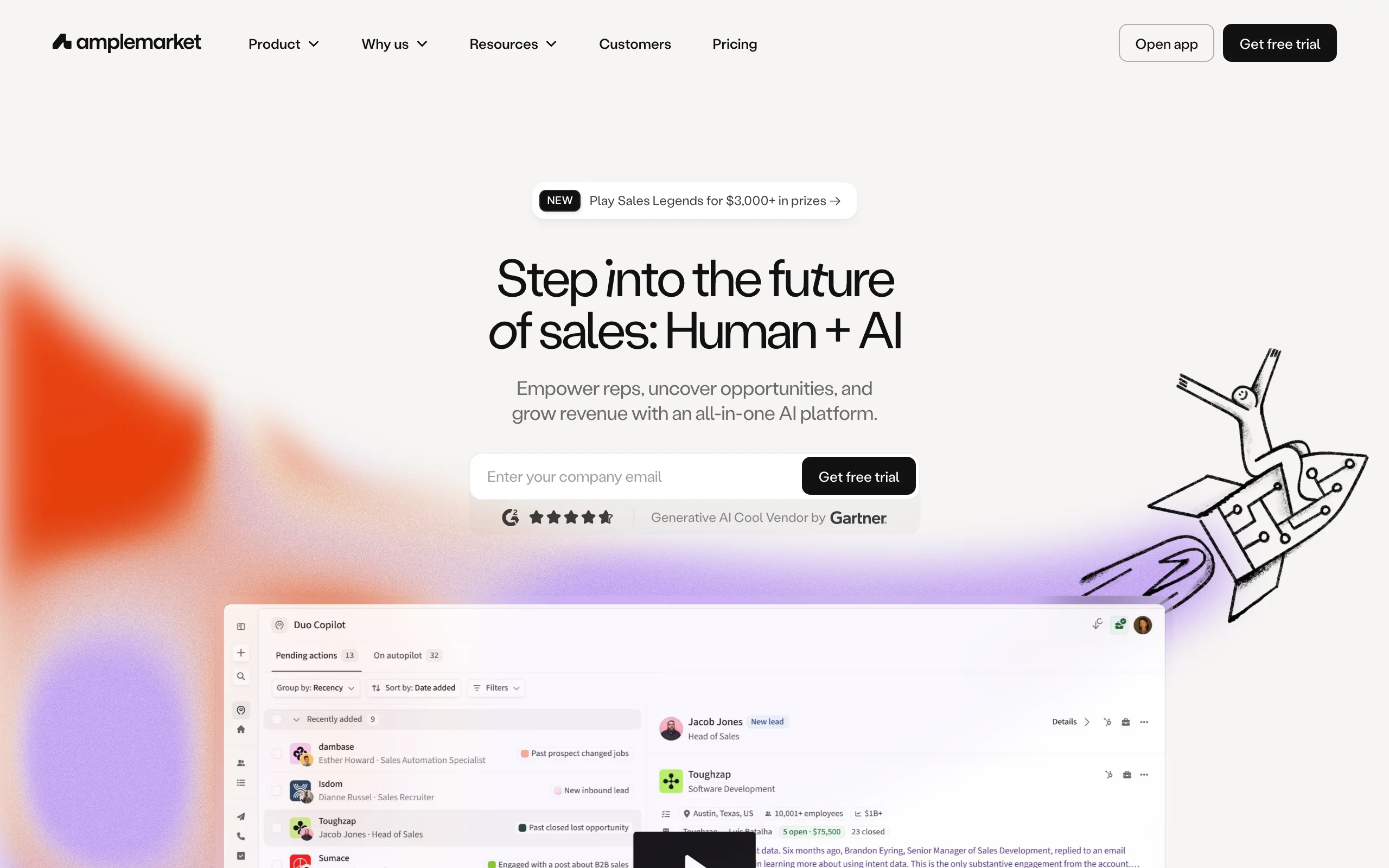
5. Amplemarket (Duo), best for AI plus human in one platform
Amplemarket takes a deliberate stance against full autonomy. Its Duo agent sits inside a complete data and outreach platform, handling research and drafting while a human still steers strategy and approves the moves that matter. The argument is that AI and humans together beat an unattended agent, especially on message quality and account selection.
That makes Duo a strong fit for teams that want AI's speed without surrendering control. It also means more of your team's time stays in the loop than a "set it and forget it" agent promises.
Key features:
- AI research and drafting inside a full platform
- Built-in B2B data and enrichment
- Multichannel sequencing with human oversight
- Buying-signal detection
- Deliverability tooling
Best for:
- Teams that want AI's speed with a human still driving
- Orgs that value message quality over raw volume
Pricing:
- Startup plan from around $600/month on annual terms
- Growth and Elite: custom
Pros:
- Human-in-the-loop philosophy lowers spam risk
- Full data and outreach stack in one place
Cons:
- Requires more human time than a fully autonomous agent
- Platform breadth can be more than small teams need
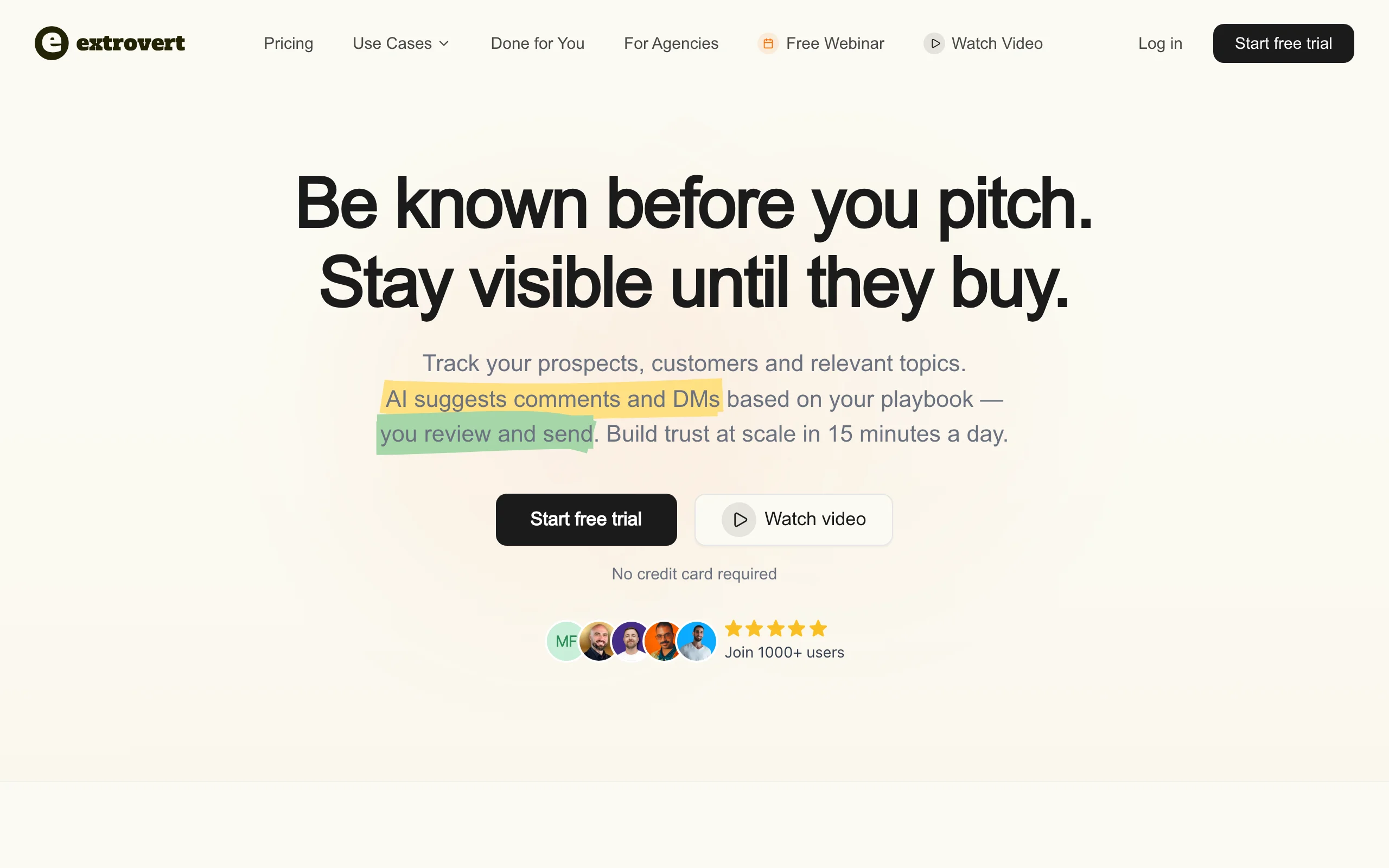
6. Extrovert, best for warm, human-reviewed LinkedIn engagement
Extrovert trades Artisan's and 11x's full-funnel autonomy for a narrower, LinkedIn-only job done with a human in the loop. Instead of sourcing and sending on its own, it tracks the prospects and topics you already care about, surfaces their posts, and suggests on-brand comments and DMs from your playbook. You review and approve every one before it sends.
The trade-off is scope. It is not a multichannel outbound agent and does not touch email or cold calling, so it is not a fit for teams whose whole motion is autonomous top-of-funnel volume. For teams where LinkedIn is the primary channel and reply rate depends on the prospect recognizing the sender, it is the safer, warmer layer that most autonomous agents skip.
Key features:
- Prospect and topic tracking in a curated LinkedIn feed
- AI comment and DM suggestions trained on your playbook and voice
- Human-in-the-loop review: every message is a draft until you approve it
- Buying signal and job-change alerts to time outreach
- Engagement reporting to track pipeline influence over time
Best for:
- Teams where LinkedIn is the primary channel and reply rate depends on familiarity, not volume
- Orgs that want AI's speed without handing sending to an unattended agent
Pricing:
- Starter: From $49/month
- Pro: From $99/month
- Agency plans available; see Extrovert pricing
- Free trial available
Pros:
- Human-in-the-loop review avoids the spam-flag and account-restriction risk that comes with fully automated sending
- 15-minute daily workflow fits alongside an existing outbound motion instead of replacing it
- Comments build visibility with the prospect's network, not just the prospect
Cons:
- LinkedIn-only; not a multichannel or email-sending agent like Artisan or Salesforce
- Requires daily human review, so it will not cut headcount the way a fully autonomous agent claims to
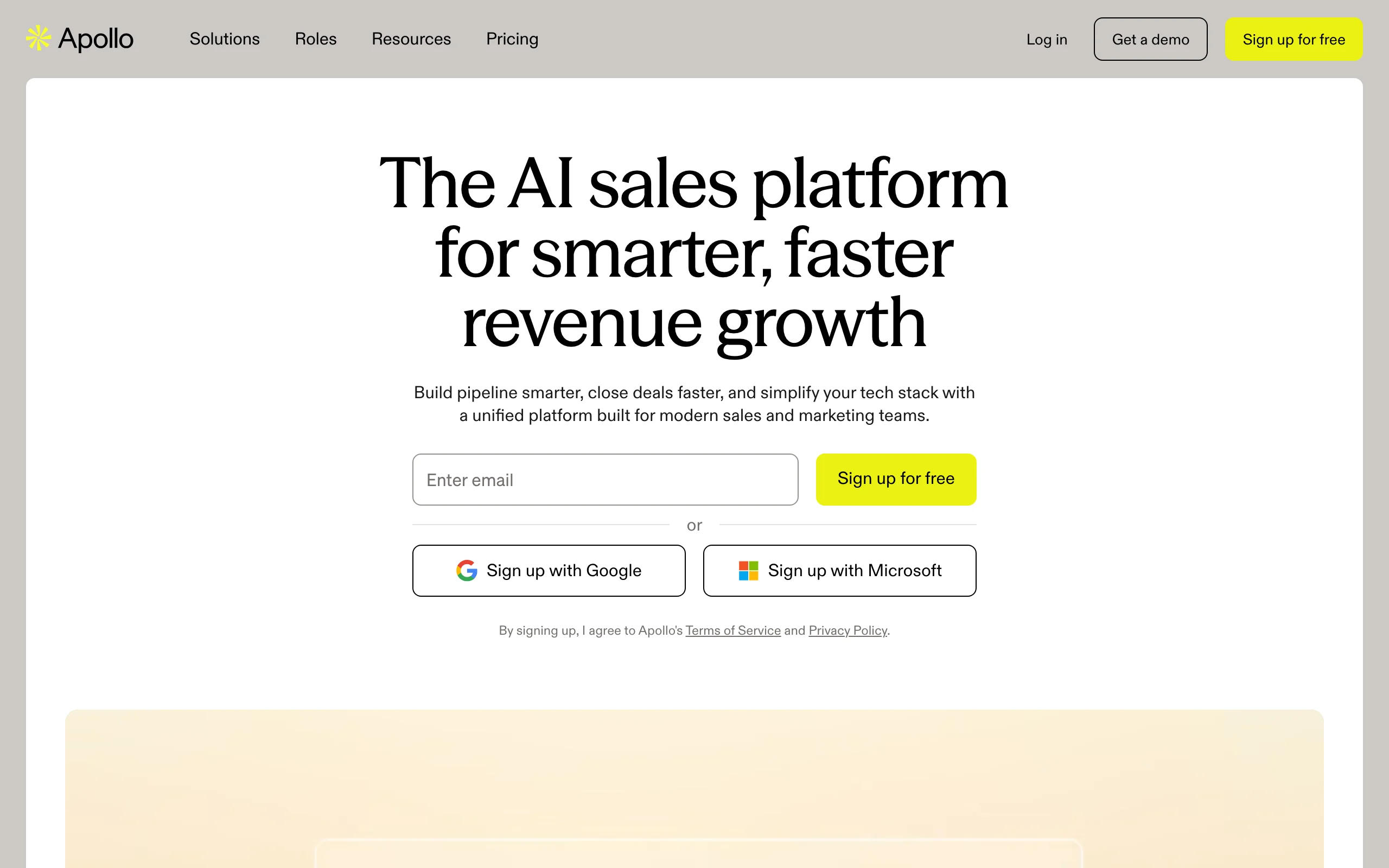
7. Apollo.io, best all-in-one on a budget
Apollo.io trades Extrovert's warm, human-reviewed LinkedIn workflow for a broad, affordable database and sequencing stack. It is not a pure AI BDR, but it bundles enough of the workflow that many teams use it as one. You get a 275M-plus contact database, built-in email sequencing, a dialer, basic CRM features, and a growing set of AI assists for writing and prioritization. The draw is getting most of the outbound stack in one affordable place.
It is the practical pick for teams that want data and sending without a five-figure contract. The AI is more assist than autonomous agent, so a human still runs the motion, which for many teams is a feature, not a gap.
Key features:
- 275M+ verified contact database
- Email sequencing and dialer
- AI writing and prioritization assists
- Basic CRM and pipeline tracking
- Chrome extension and API
Best for:
- SMB teams wanting data plus sequencing on a budget
- Reps who want AI assists, not full autonomy
Pricing:
- Free tier available
- Paid plans from around $49/user/month
Pros:
- Affordable and broad
- Large built-in database
Cons:
- AI is assistive, not a standalone autonomous agent
- Data accuracy varies by segment
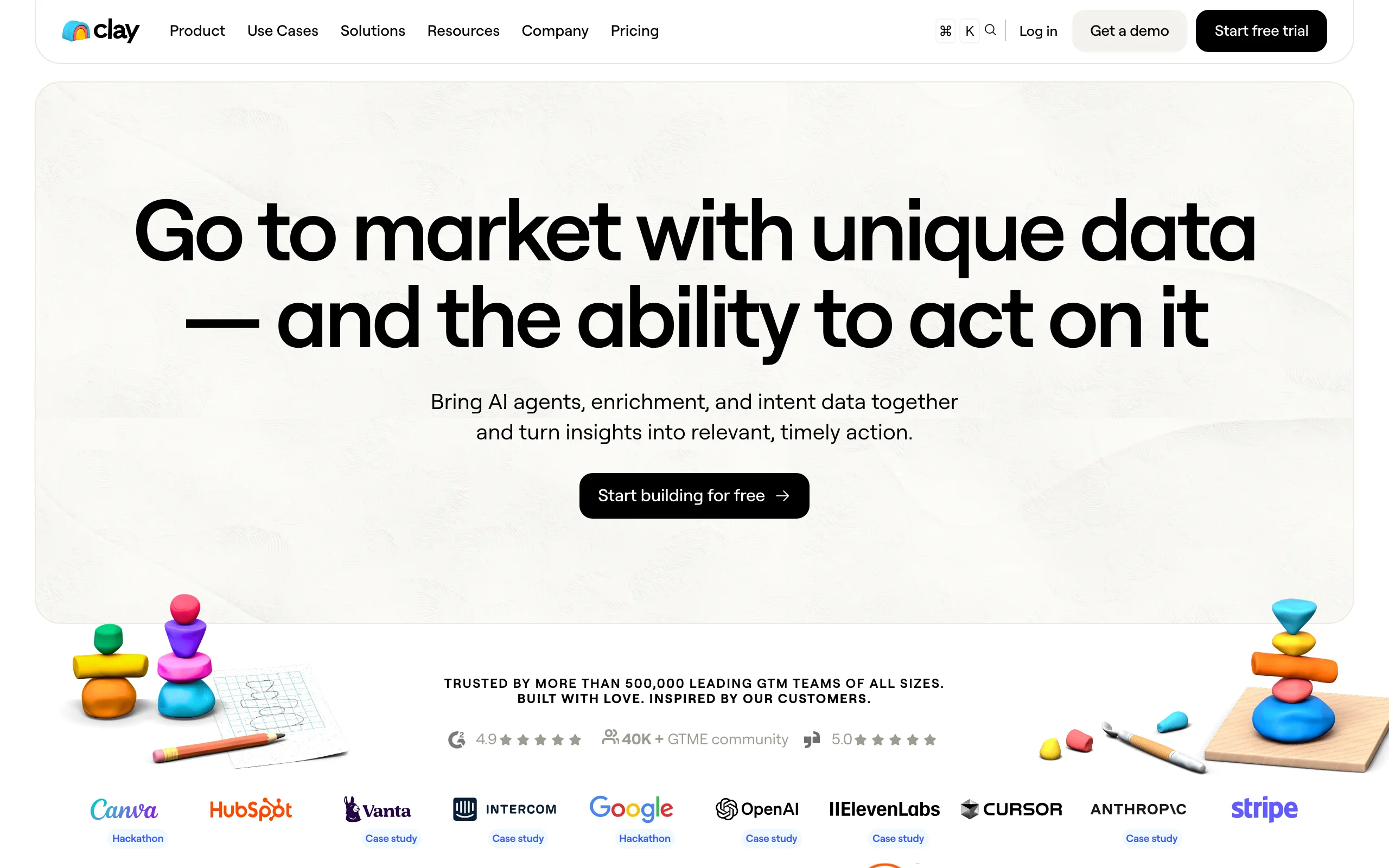
8. Clay (Claygent), best for custom research workflows
Clay is an enrichment and research platform whose Claygent feature lets you point an AI agent at a specific research task: visit a prospect's site, find a data point, summarize it, and feed it into your outreach. It is not a turnkey SDR but the engine ops and growth teams use to build precise, custom workflows that other tools cannot.
That power comes with a learning curve. Clay rewards teams willing to build, and underdelivers for anyone expecting a one-click agent. Paired with a sending tool, it produces some of the sharpest personalization available.
Key features:
- Claygent AI research agent for custom tasks
- Waterfall enrichment across many data providers
- Spreadsheet-style workflow builder
- Integrations with sending and CRM tools
- API access
Best for:
- Ops and growth teams building custom enrichment
- Teams that pair research with a separate sender
Pricing:
- Free tier available
- Paid plans from around $149/month
Pros:
- Unmatched flexibility for custom research
- Pay-for-hits enrichment model
Cons:
- Real learning curve, not turnkey
- Needs a separate tool to actually send
9. Relevance AI, best for building your own agents
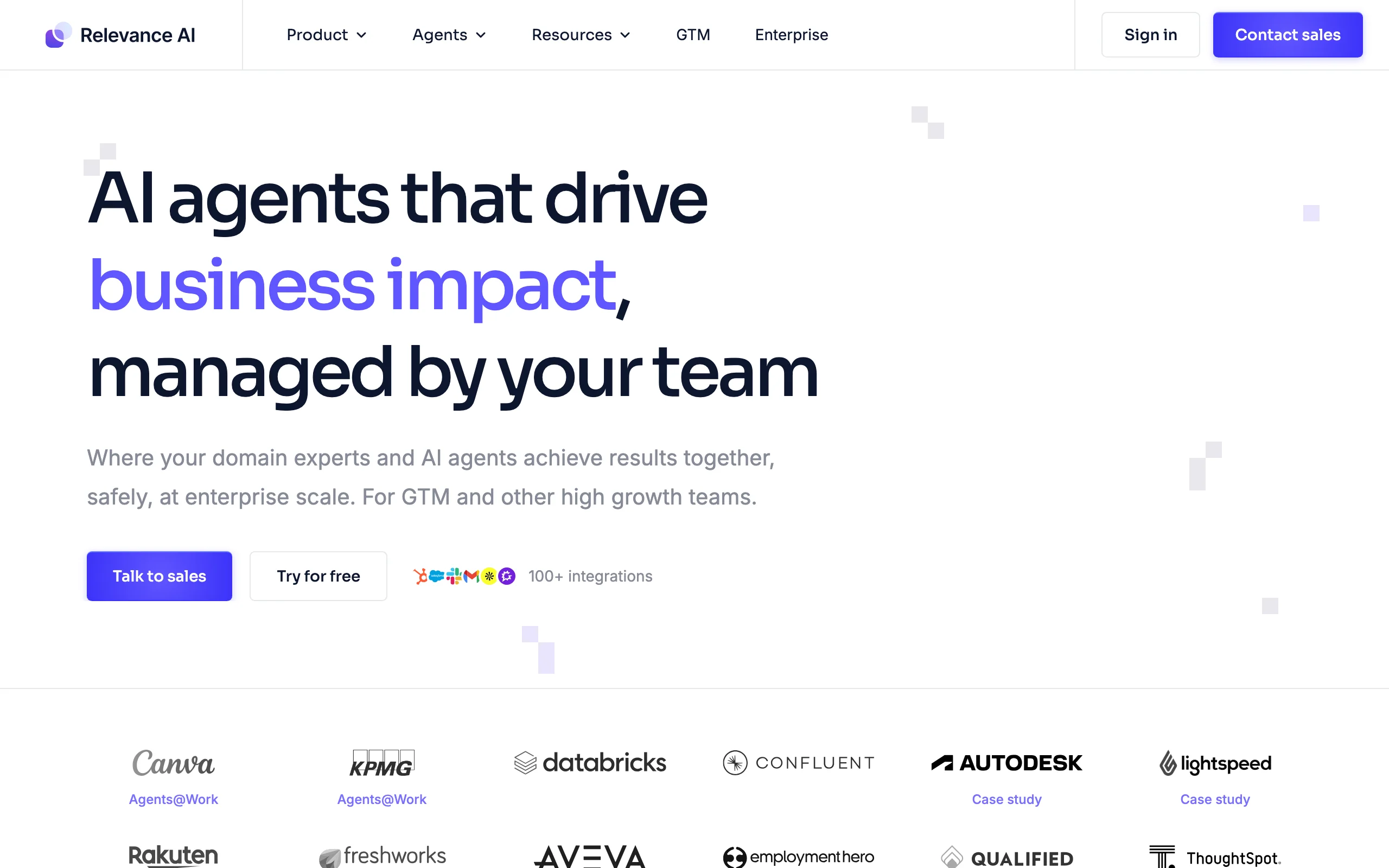
Relevance AI is a low-code platform for building a custom "AI workforce" across sales, marketing, and operations. Rather than a fixed AI BDR, it gives you the components to assemble agents that fit your exact process, from research to outreach to internal workflows. Its flexibility is genuine, and so is the technical investment it asks for.
For teams with the appetite to build, it can do things off-the-shelf agents cannot. For teams that just want outbound running tomorrow, it is more platform than they need.
Key features:
- Low-code agent builder
- Multi-step custom workflows
- Sales, marketing, and ops use cases
- Integrations and API
- Reusable agent components
Best for:
- Technical teams building bespoke agents
- Orgs standardizing AI across functions, not just sales
Pricing:
- Free plan with limited monthly actions
- Team plans up to around $349/month
- Enterprise: custom
Pros:
- Highly flexible and reusable
- Spans beyond sales into ops
Cons:
- Requires real build effort
- Overkill for simple outbound needs
10. Qualified (Piper), best for inbound AI SDR
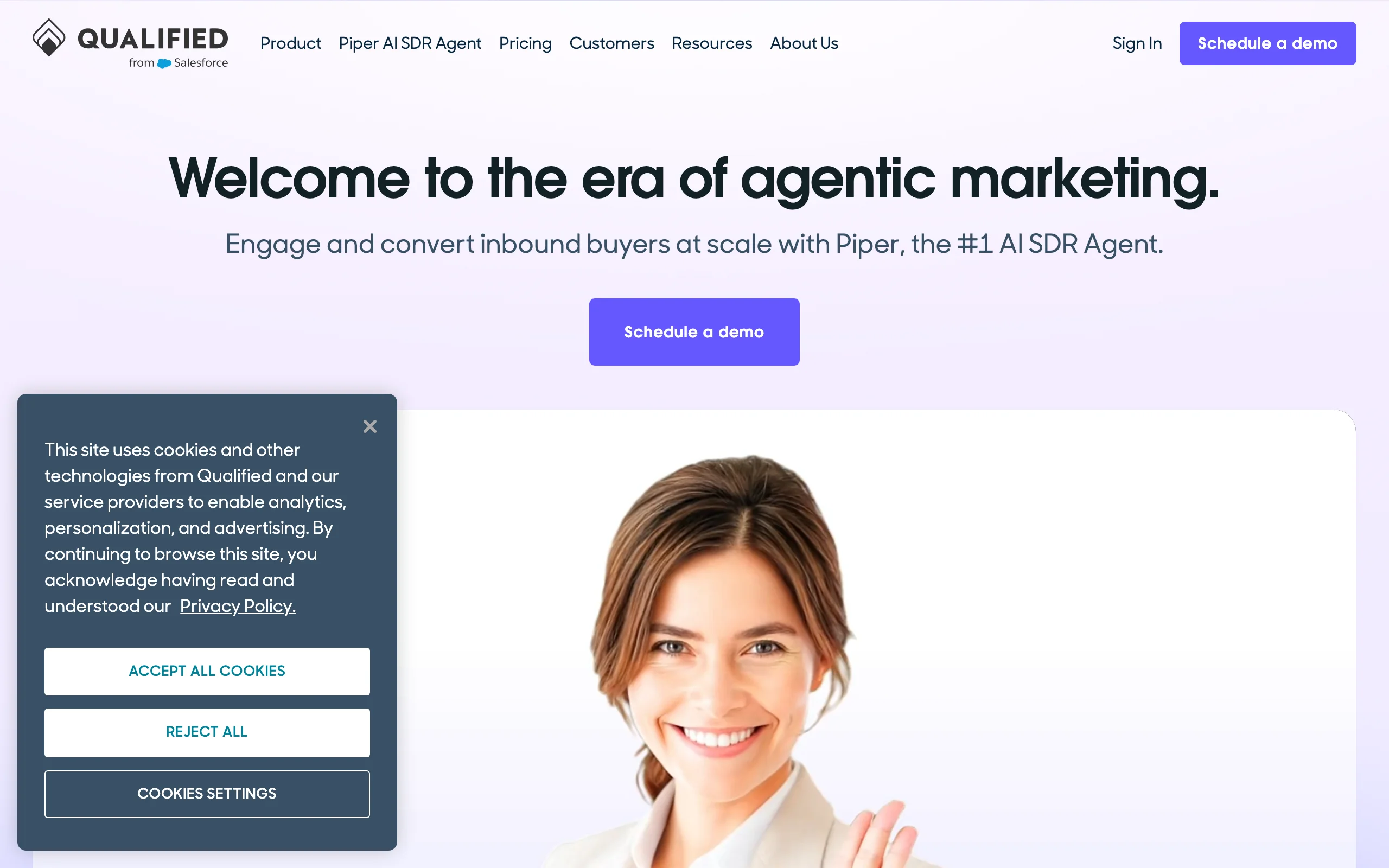
Qualified flips the AI BDR model toward inbound. Its agent, Piper, lives on your website and engages visitors in real time: it qualifies them, answers questions, identifies whether they match your ICP, and books a meeting with the right rep. Instead of chasing cold prospects, it converts the demand already landing on your site.
That makes it a different purchase than an outbound agent. It shines for teams with meaningful website traffic and a strong inbound motion, and it is irrelevant for teams whose pipeline is purely cold outbound.
Key features:
- Real-time website visitor engagement
- ICP qualification and routing
- Meeting booking with the right rep
- Account and intent signals
- Salesforce-centric integration
Best for:
- Teams with strong inbound website traffic
- Demand-gen motions converting visitors to meetings
Pricing:
- Sales-led, custom pricing
- Third-party estimates start around $40,000/year
Pros:
- Converts existing demand, no cold-send risk
- Strong for high-traffic sites
Cons:
- Inbound only, not an outbound prospecting agent
- Enterprise price floor
How to choose the best AI BDR tool for your needs
The right AI BDR tool depends on how much control you want to keep, which channel carries your pipeline, and what you can spend. Run any shortlist on your own data for two weeks before signing, since reply rate on your real list matters far more than a demo.
Autonomous agent or human-in-the-loop?
Fully autonomous agents like Ava and Alice promise to remove reps from the loop entirely, which maximizes volume but raises spam-flag and reputation risk. Platforms like Amplemarket Duo and Extrovert keep a human steering, trading some speed for message quality and safety. Extrovert takes that furthest: it is LinkedIn-only and every comment or DM is a draft you approve, which is the safest posture if your account or brand cannot absorb a bad automated run. To understand the trade-off in depth, see what an AI BDR actually does well and where it breaks.
Which channel carries your pipeline?
For email-led outbound, Agent Frank and AiSDR focus on deliverability and sending. For inbound, Piper converts website traffic. For LinkedIn and relationship-led motions, note that several autonomous agents lost or restricted LinkedIn access in 2026, so an automation-only approach there is fragile.
Self-serve budget or enterprise contract?
Apollo and Clay start affordable and self-serve, fitting SMB teams. 11x and Qualified are sales-led with five-figure floors built for larger orgs. Compare total cost, including the human time still required to review output, not just the sticker price.
Build versus buy?
If your process is standard, a packaged agent gets you live faster. If it is unusual, Relevance AI and Clay let you build exactly what you need, at the cost of setup effort. Most teams should buy first and only build once they hit a real limit.
Whichever tool you shortlist, pilot it on your own list for two weeks before signing. A demo tells you what the interface looks like; your real reply rate tells you whether the tool fits your motion. If the gap you keep running into is familiarity rather than volume, that is the specific problem Extrovert is built for, and it is the warm outreach layer worth testing alongside whichever autonomous or data tool you pick. See how it works for LinkedIn for SDRs, or compare plans on Extrovert pricing.
FAQ
What is an AI BDR tool?
An AI BDR tool is software that automates the outbound business development role, from sourcing and researching prospects to writing, sending, and following up on outreach. The most autonomous versions run the full top of funnel with little human input, while others act as AI assists inside a platform a rep still drives. For a deeper breakdown, see what an AI BDR is and how the agents perform.
What is the difference between an AI BDR and an AI SDR?
There is no meaningful technical difference; the terms are used interchangeably. Vendors pick whichever acronym fits their positioning, with Artisan calling Ava an AI BDR and 11x calling Alice an AI SDR. Both describe autonomous agents that run outbound prospecting.
Do AI BDR tools actually book meetings?
Yes, but generally at lower rates than human reps so far. A 2026 analysis of 100,000 emails found AI outreach booked meetings at 0.7% versus 1.1% for humans, while getting flagged as spam more than twice as often. They are strongest at research and list building and weaker at nuanced replies and timing.
How much do AI BDR tools cost?
AI BDR tools range from around $49/month for assistive platforms like Apollo to $900/month and up for autonomous agents like AiSDR, with enterprise options such as 11x and Qualified commonly running five figures per year. Factor in the human time still needed to review output when you compare total cost.
Will an AI BDR get my domain or LinkedIn account flagged?
It can, especially with high-volume automated sending. AI-sent email was flagged as spam roughly 8% of the time versus 3% for human-sent mail in 2026, and LinkedIn restricted a major AI BDR's automated outreach early that year. Human-in-the-loop tools like Extrovert, where a person approves each comment or DM before it sends, stay safer than fully unattended agents.
What is the best AI BDR tool for a warm, LinkedIn-only motion?
Extrovert is the best pick if your pipeline runs through LinkedIn and the bottleneck is recognition, not volume: it suggests on-brand comments and DMs from your playbook and you approve every one before it sends. Fully autonomous agents like Artisan or 11x cover more channels but trade that safety and warmth for raw send volume.
What is the best AI BDR tool for a small team?
For small teams on a budget, Apollo.io and Clay offer the most value without an enterprise contract, since both start affordable and self-serve. If your pipeline is LinkedIn-heavy, Extrovert starts at $49/month for the warm, human-reviewed side of outreach. If you want full autonomy and can spend more, AiSDR launches fastest. Pilot on your real data before committing.
Can I run outbound with AI without spamming people?
Yes, by leading with engagement instead of cold volume. Smaller, targeted campaigns of 50 recipients or fewer average a 5.8% response rate versus 2.1% for large lists, and warming prospects through comments before you reach out lifts replies further. Pair a data tool with an engagement-led layer like the one covered in these B2B prospecting tools to keep outreach human.
Sources: Digital Applied: AI SDR Real Performance, Amplemarket: Best AI Sales Agents, Cleanlist: 2026 Cold Email Response Rates