Most reps find out a prospect changed jobs, got promoted, or started talking about a problem you solve weeks after it happened, usually by accident. By then the moment is gone and the message you send lands like every other cold touch in their inbox. The teams booking more meetings are not working harder; they are watching the right signals and showing up while the moment is still warm.
That is the job of a LinkedIn monitoring tool: track your prospects, accounts, and topics so you know the instant something changes, whether that is a job move, a post about a pain point you solve, or a comment thread worth joining. Picking the right one changes whether you catch these moments in real time or find them a week late in a CRM report.
This guide compares the 9 best LinkedIn monitoring tools for SDRs in 2026: what each one tracks, actual pricing, genuine strengths and limits, and a framework to help you pick the one that fits your workflow.
See how SDRs use Extrovert to warm up accounts and show up on prospects' posts before the first touch.
Extrovert for SDRsBest LinkedIn monitoring tools: a brief overview
If you want a signal to turn into a drafted comment or DM instead of just an alert, Extrovert is the best LinkedIn monitoring pick because it closes that loop in the same tool. Here's how it stacks up against the detection-only alternatives.
- Extrovert: Best for turning LinkedIn monitoring into action. It tracks your prospects and topics, then suggests on-brand comments and DMs from your playbook so you can act on what you see instead of just getting an alert.
- Trigify: Best for granular, rule-based LinkedIn and social signal alerts: trades Extrovert's built-in response layer for sharper detection routed to your CRM or Slack, with no engagement layer of its own.
- UserGems: Best for enterprise-scale job change and champion tracking: trades Extrovert's signal-plus-action workflow for AI-driven account scoring at a much higher price point.
- LinkedIn Sales Navigator: Best for native LinkedIn alerts combined with LinkedIn's own prospecting database: trades Extrovert's suggested-response workflow for raw signal detection and list building.
- Clay: Best for building a custom monitoring stack that pulls LinkedIn signals alongside 150+ other data sources.
- RB2B: Best for identifying anonymous website visitors and surfacing their LinkedIn profile the moment they show up on your site.
- Common Room: Best for unifying LinkedIn activity with community and product usage signals into one buyer profile.
- LeadIQ: Best for contact data with built-in champion tracking on the contacts you already have saved.
- Surfe: Best for capturing LinkedIn profiles and signals straight into your CRM in one click.
| Tool | Key strength | Pricing | Platforms |
|---|---|---|---|
| Extrovert | Tracks prospects and topics, then suggests comments and DMs to send | Free 10-day trial; plans from $29/seat/month | Web, Chrome extension |
| Trigify | Granular LinkedIn, X, and Reddit signal alerts routed to CRM or Slack | Free 14-day trial; plans from $40/month | Web, API, MCP, CLI |
| UserGems | Job change and champion tracking with AI account scoring | Custom pricing; plans from $2,750/month | Web, Chrome extension, API |
| LinkedIn Sales Navigator | Native LinkedIn job change and account alerts with a full prospecting database | Free trial; Core from $119.99/month | Web, iOS, Android |
| Clay | Pulls LinkedIn signals alongside 150+ other data providers into one workflow | Free tier; plans from $167/month | Web, API |
| RB2B | Identifies U.S. website visitors and pushes their LinkedIn profile to Slack in real time | Free plan; paid plans from $79/month | Web, Slack, CRM integrations |
| Common Room | Unifies LinkedIn activity, community, and product signals into one profile | Essential from $2,500/month (billed annually) | Web, browser extension, API |
| LeadIQ | Contact data plus champion tracking when saved contacts change roles | Free plan; Pro from $200/month | Chrome extension, Web, API |
| Surfe | One-click LinkedIn profile capture and job change alerts synced to CRM | Free plan; plans from $39/user/month | Chrome extension, Web |
1. Extrovert, best for turning LinkedIn monitoring into action
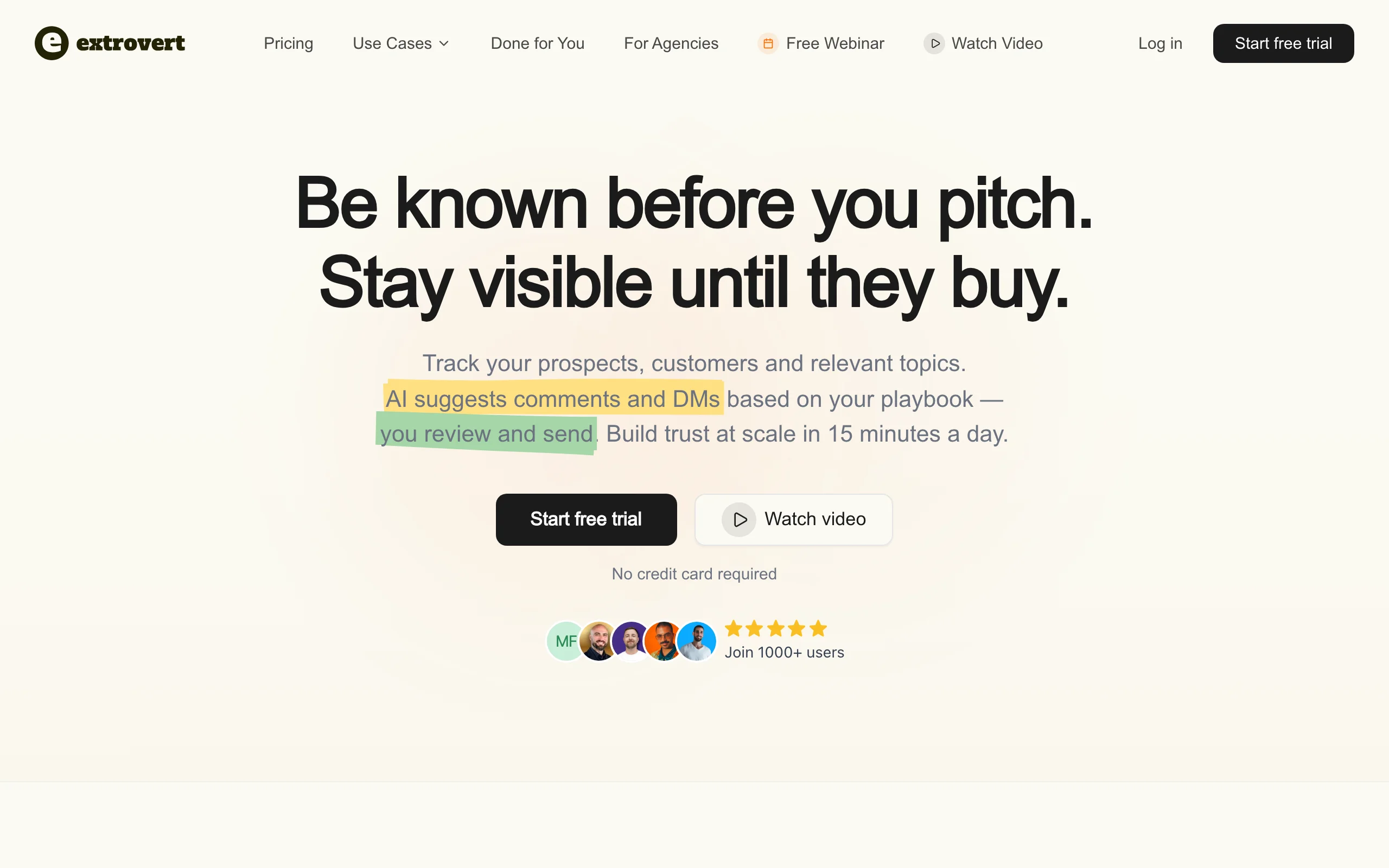
Extrovert tracks the prospects, customers, and topics you care about on LinkedIn and surfaces their posts and relevant discussions as they happen. Where most monitoring tools stop at an alert, Extrovert closes the loop: its AI drafts on-brand comments and DMs from your own playbook so you can respond to what you just saw without switching tools. Every suggestion is a draft, not a send. You review, edit, and approve before anything goes out.
The whole routine runs in about 15 minutes a day. Instead of a two-week sequence that goes cold, Extrovert is built around a 90-day loop of consistent, human-reviewed touches that build familiarity before you ever pitch. That workflow is a natural fit for SDRs juggling a full prospect list who need monitoring and outreach to live in the same place.
Key features:
- Prospect, customer, and topic tracking on LinkedIn
- AI-suggested comments and DMs drafted from your playbook
- Job-change and activity alerts on tracked prospects
- Human-in-the-loop review and approval on every action before it sends
- Connection requests and DMs to prospects who don't post
- Team and agency campaign management
Best for:
- SDRs who want monitoring and outreach in the same daily workflow, not a separate alert feed
- Small teams that need signal coverage on an active list without enterprise budgets
Pricing:
- 10-day free trial, no card required
- Light plan from $29/seat/month (250 prospects)
- Business plan from $49/seat/month (500 prospects, most popular); see Extrovert pricing
Pros:
- Monitoring and response live in one tool, so a signal turns into a drafted comment or DM immediately
- Human-reviewed by default, which avoids the account risk that comes with unattended, fully automated sending
- Affordable relative to enterprise signal platforms on this list
Cons:
- LinkedIn-only; it is not a multichannel intent or enrichment platform
- Built for steady daily monitoring, not a one-off bulk signal pull across your whole market
2. Trigify, best for granular LinkedIn and social signal alerts
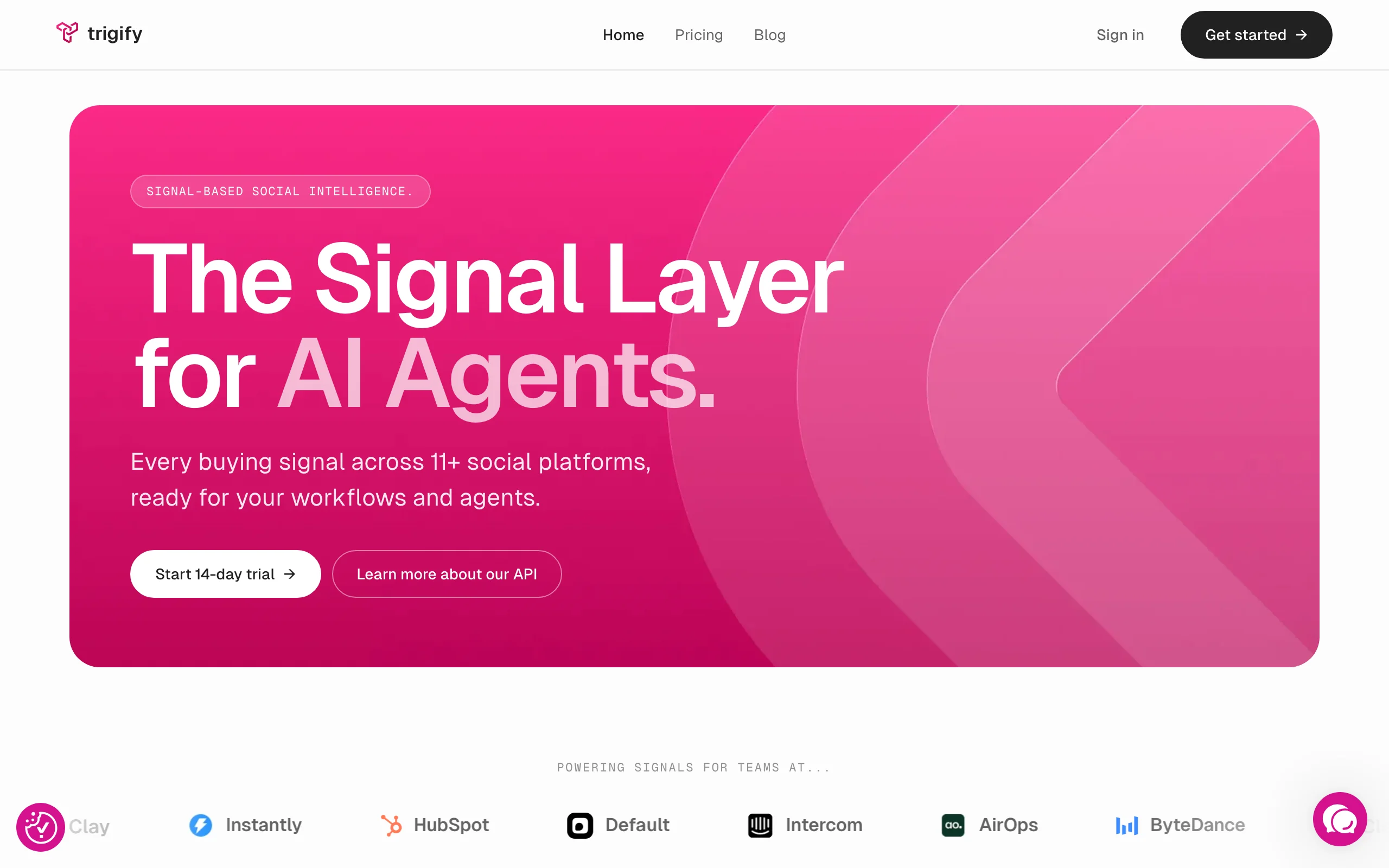
Trigify trades Extrovert's built-in response layer for sharper, rule-based detection. It monitors LinkedIn along with X, Reddit, YouTube, and podcasts for signals you define: role changes, competitor engagement, hiring announcements, and posts on specific topics. Each signal resolves to a named person with the original post attached, so reps see exactly what triggered the alert. Trigify routes matches to your CRM, Slack, or outreach tool through webhooks, an API, or an MCP server for AI agent workflows.
The strength here is precision. Instead of a generic "prospect posted something" ping, you can define a rule like "posted about hiring challenges in the last 7 days" and route only those to your best sequence. Trigify is a detection layer, not an engagement tool: it tells you what happened, and you still need somewhere to act on it.
Key features:
- Signal monitoring across LinkedIn, X, Reddit, YouTube, and podcasts
- Custom rule-based signal definitions (role changes, keywords, company events)
- Named-person resolution with the source post attached to each alert
- Webhook, REST API, and MCP server routing for CRMs and AI agents
- CLI access for terminal-based workflows
Best for:
- RevOps and SDR managers who want tightly defined LinkedIn signals routed into an existing outreach stack
- Teams already running a strong sequence tool that just need a sharper detection layer on top
Pricing:
- 14-day free trial, no card required
- Starter plan from $40/month
- Max plan from $199/month; Enterprise is custom
Pros:
- Precise, rule-based signal definitions instead of generic activity noise
- Multi-platform coverage beyond LinkedIn alone (X, Reddit, YouTube, podcasts)
- Built for AI-agent and automation workflows via API and MCP
Cons:
- No built-in engagement layer; you need a separate tool to act on a signal
- Multi-platform coverage adds setup and rule-tuning work upfront
3. UserGems, best for enterprise job change and champion tracking
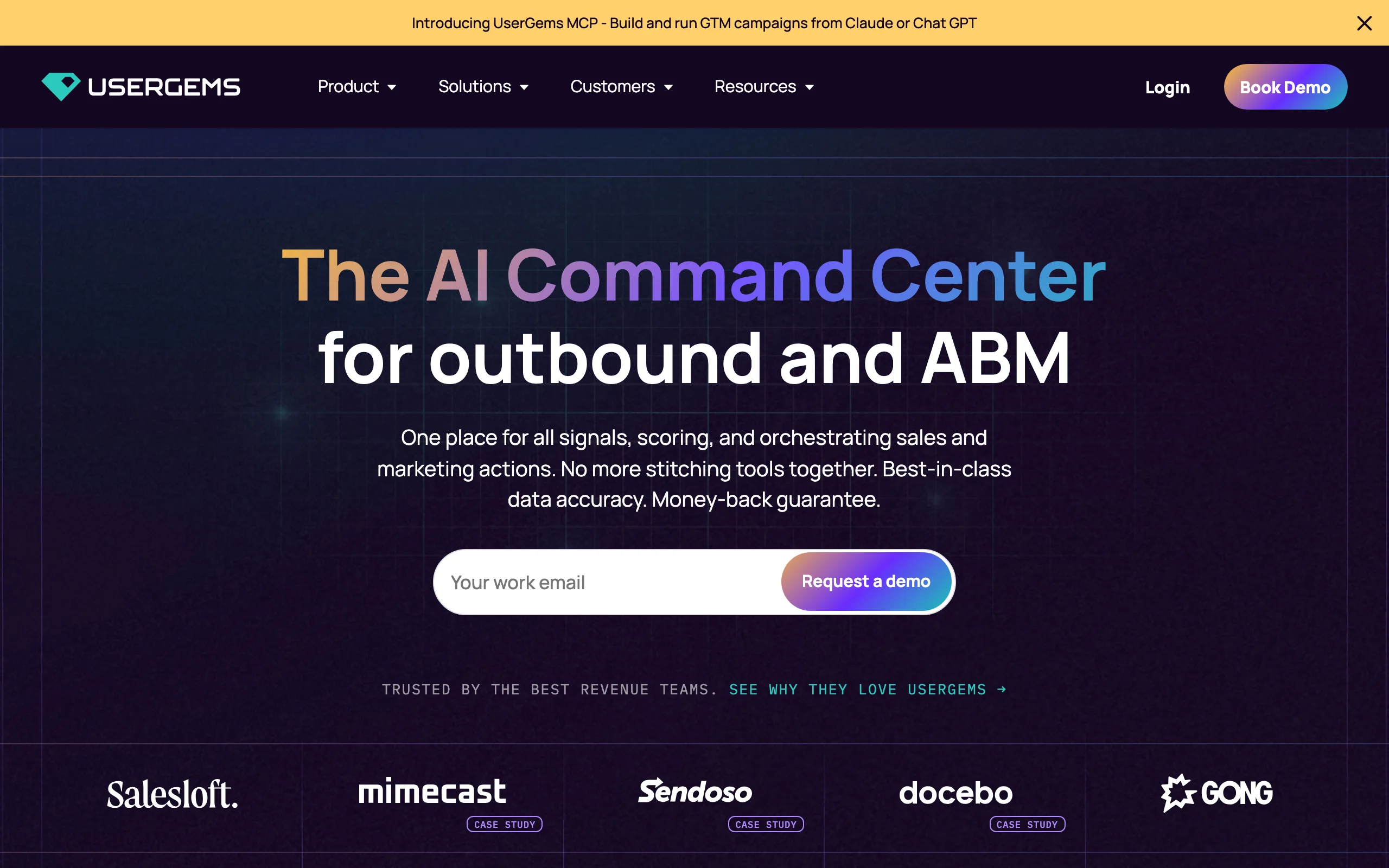
UserGems trades Extrovert's signal-plus-action workflow for enterprise-scale detection alone. It tracks 30+ native signals, most notably job changes, contact-level intent, hiring, and M&A activity, and uses an AI agent called Gem-E to score accounts against your closed-won patterns. Its best-known use case is champion tracking: when a past customer or engaged buyer changes companies, UserGems flags it so a rep can reconnect before a competitor does. Job changers are historically far more likely to evaluate new tools in their first few months in a role, which is the moment UserGems is built to catch.
The platform runs through a web dashboard, a Chrome extension, CRM embeds in Salesforce and HubSpot, and API connections into sequencing tools and ad platforms. UserGems is priced and positioned for revenue teams running coordinated ABM and champion programs, not solo reps or small SDR pods.
Key features:
- 30+ native buying signals, including job changes, hiring, and M&A
- AI-driven account scoring (Gem-E) trained on your closed-won data
- Native embeds in Salesforce, HubSpot, and Dynamics
- Chrome extension for rep-level lookups
- Integrations with Outreach, Salesloft, Gong Engage, LinkedIn, Meta, and Google Ads
Best for:
- Mid-market and enterprise revenue teams running structured champion and account-tracking programs
- Teams that already have closed-won history to train account scoring against
Pricing:
- Core plan from $2,750/month ($33,000/year), plus a $3,000 implementation fee
- Advanced and Elite tiers scale up to $10,000/month
- A discounted Starter package is available for companies under 80 employees
Pros:
- Deep, multi-signal coverage beyond job changes alone
- Strong CRM-native workflow for large sales orgs
- Backed by a stated ROI guarantee on the paid tiers
Cons:
- Enterprise pricing puts it out of reach for most SDR teams evaluating tools on their own budget
- Overkill if job changes on your own tracked list are the only signal you need
4. LinkedIn Sales Navigator, best for native LinkedIn alerts and list building
LinkedIn Sales Navigator trades Extrovert's suggested-response workflow for LinkedIn's own prospecting and monitoring data. It is the only option here with direct access to LinkedIn's full data graph. Saved leads trigger alerts on job changes, and Advanced-tier plans add buyer-intent signals showing when people at a target account are engaging with your content or company page. Because the data comes straight from LinkedIn, there is no third-party scraping or compliance question to think through.
For teams doing LinkedIn for B2B sales, Sales Navigator covers targeting, list building, and signal detection well. What it does not do is suggest what to say once a signal fires or track whether your outreach is building familiarity over time, which is why many teams pair it with a dedicated engagement tool.

Key features:
- Real-time job-change and activity alerts on saved leads
- Buyer Intent signals on Advanced and Advanced Plus plans
- Advanced search filters for building and saving prospect lists
- TeamLink for warm introduction paths through shared connections
- CRM sync with Salesforce and Dynamics 365
Best for:
- Any SDR or AE prospecting on LinkedIn who needs both list building and native signal detection
- Teams that want first-party LinkedIn data with no third-party data-sourcing questions
Pricing:
- Core plan from $119.99/month per seat
- Advanced plan from $159.99/month per seat
- Advanced Plus: custom pricing
- Free trial available for members who haven't used one in the past 365 days
Pros:
- First-party LinkedIn data with no compliance ambiguity
- Rich list-building and filtering alongside signal alerts
- Buyer Intent adds account-level engagement visibility on higher tiers
Cons:
- Meaningfully more expensive per seat than most tools on this list, especially at Advanced tier
- No AI-suggested responses; signals still require a rep to draft the outreach
- Alerts stay inside Sales Navigator, so routing them elsewhere takes manual work
5. Clay, best for building a custom LinkedIn signal stack
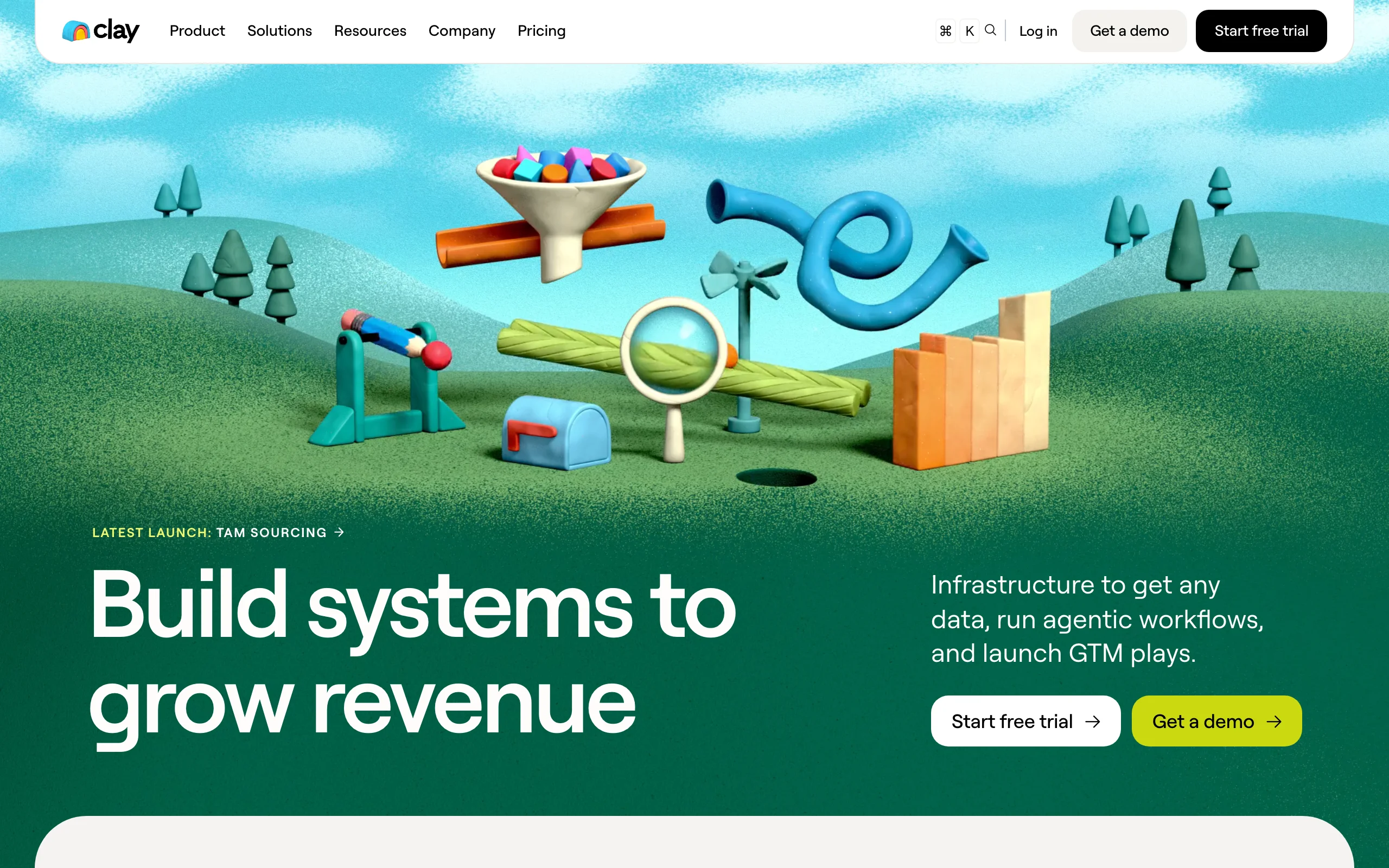
Clay is a data enrichment and workflow platform, not a purpose-built LinkedIn monitoring tool, but its ability to pull job-change signals and LinkedIn activity alongside 150+ other data providers makes it a common choice for teams that want to build their own monitoring stack. You create tables that enrich a contact list, layer in signals through waterfall logic (check provider A, then B, then C), and push the output into your CRM or outreach tool. Job-change signals and web intent become available starting on the Launch plan.
The tradeoff is setup time. Clay rewards technically comfortable RevOps builders willing to configure the workflow; it is not a plug-and-play alert feed out of the box. Once built, though, it can combine more signal types than any single-vendor tool on this list.
Key features:
- 150+ data provider integrations for enrichment and signals
- Job-change and web-intent signals on Launch tier and above
- Waterfall enrichment logic across multiple providers
- Claygent AI agent for research-style enrichment tasks
- CRM auto-sync and HTTP API on Growth tier and above
Best for:
- RevOps builders who want to combine LinkedIn signals with other data sources in one workflow
- Teams that already have a monitoring need too specific for an off-the-shelf tool
Pricing:
- Free plan: 500 actions and 100 data credits per month
- Launch plan from $167/month
- Growth plan from $446/month; Enterprise is custom
Pros:
- Most flexible way to combine LinkedIn signals with other provider data
- Free tier is generous enough to prototype a real workflow
- Scales into an enterprise-grade data layer as needs grow
Cons:
- Requires real setup time; not usable as a monitoring tool on day one
- Credit-based billing on top of the monthly fee adds cost as volume grows
6. RB2B, best for identifying website visitors by LinkedIn profile
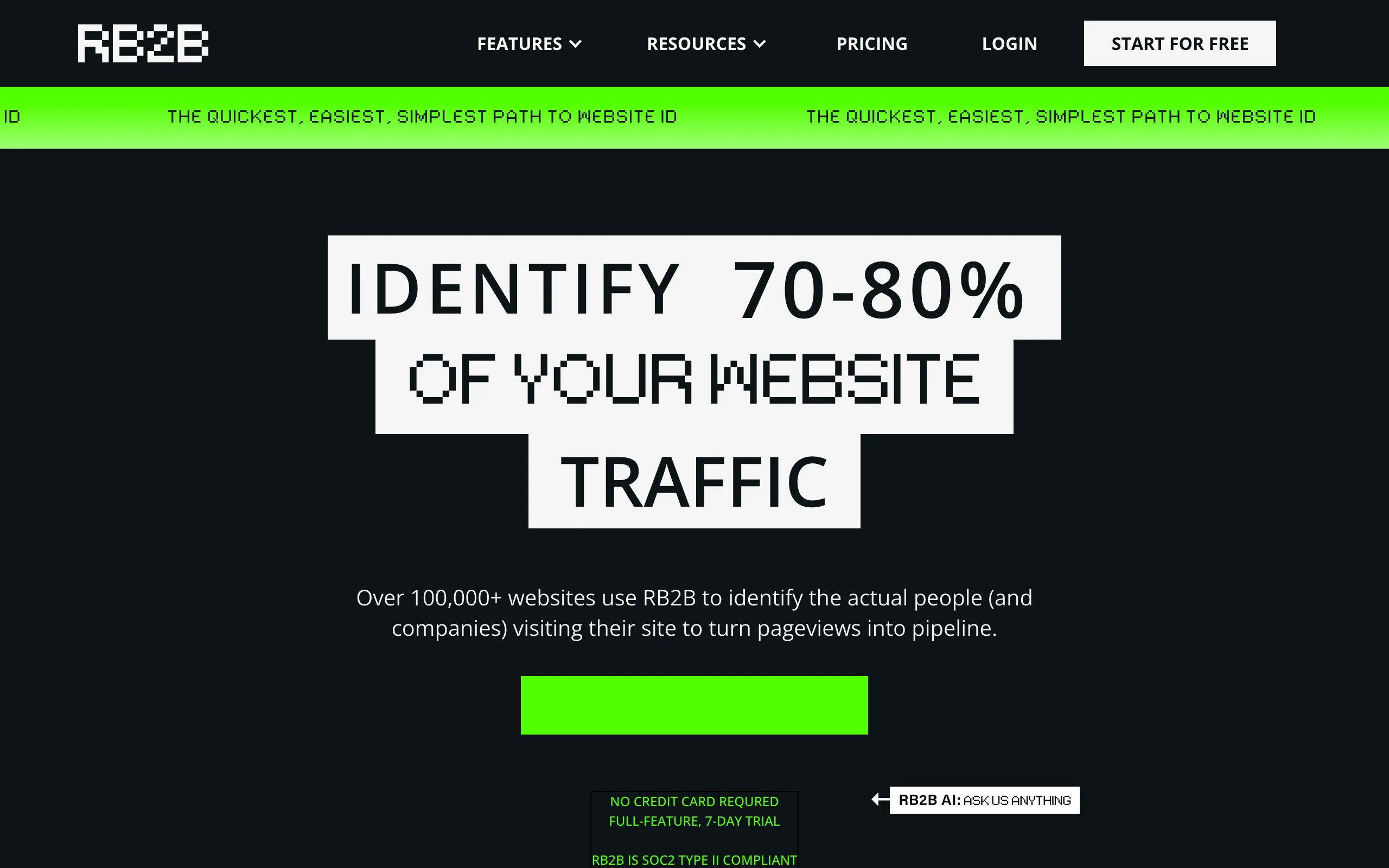
RB2B identifies the individual people, not just companies, browsing your website and pushes their name, title, and LinkedIn profile URL straight into Slack or Teams in real time. Hot Leads and Hot Pages flag which visitors match your ICP and which pages signal buying intent. Instead of a broad signal stack pulling from dozens of sources, RB2B has one job: turn an anonymous pageview into a named LinkedIn profile you can act on immediately.
Identification is strongest on U.S. traffic, where RB2B says it resolves 70-80% of visitors; international coverage is thinner. It's a self-serve tool built for reps and marketers who want a fast, affordable way to see who's on their site, not a full account-intelligence platform.
Key features:
- Person-level website visitor identification with name, title, and LinkedIn profile URL
- Real-time push to Slack or Microsoft Teams
- Hot Leads (ICP filtering) and Hot Pages (high-intent page tagging)
- Business email addresses on Pro and Pro+ plans
- Integrations with HubSpot, Salesforce, Clay, Zapier, and webhooks
Best for:
- Reps and marketers who want to know which named person from a target account just visited the site, with a LinkedIn profile attached
- Teams whose traffic is mostly U.S.-based, where identification rates are highest
Pricing:
- Free plan: 150 monthly resolutions, company-level ID and Slack push only, no card required
- Starter plan from $79/month: 300 resolutions, LinkedIn profile URLs, no email addresses
- Pro plan from $149/month: LinkedIn profile URLs, business email addresses, full integrations
Pros:
- Fast to set up and genuinely self-serve, unlike most enterprise visitor-ID platforms
- Ties an anonymous visit directly to a LinkedIn profile, not just a company name
- Affordable enough for a single rep or small team to justify on its own
Cons:
- Person-level identification drops off sharply outside the U.S.
- Identifies who showed up on your site, not what they're doing on LinkedIn otherwise; no post or job-change monitoring beyond the visit itself
7. Common Room, best for community and relationship intelligence
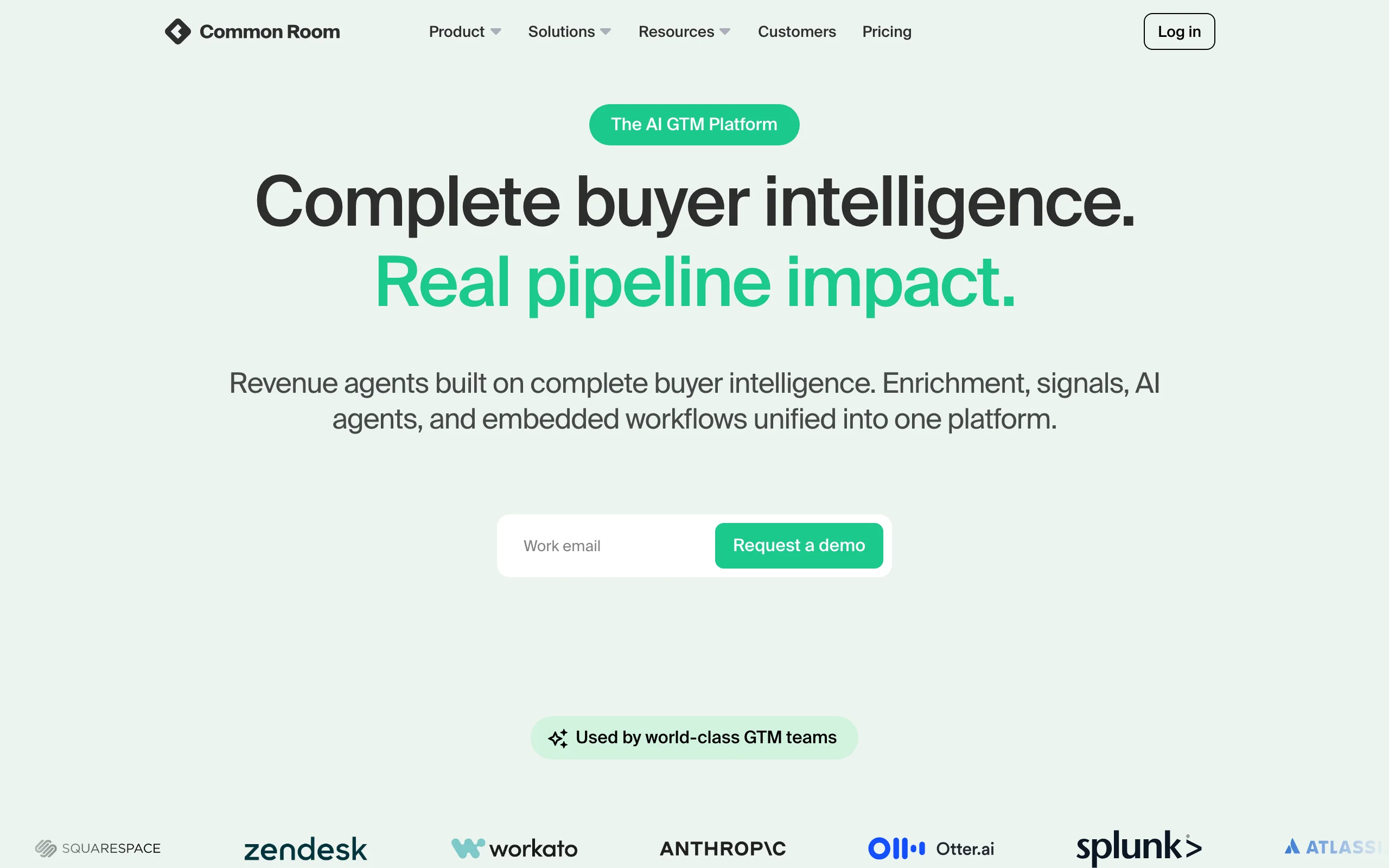
Common Room pulls buyer signals from LinkedIn activity, job changes, website visits, product usage, and community touchpoints into a single profile per contact, using what it calls identity resolution to connect fragmented data points to one person. Its RoomieAI agents handle account and contact research and draft personalized outreach, and a "Spark Brief" feature summarizes conversation intelligence for reps prepping outreach.
The platform is built for revenue teams that already have signals scattered across multiple systems, community platforms, product analytics, CRM, and social, and want one place to see them resolved into a coherent buyer picture. That breadth is the appeal and the cost: Common Room is priced and scoped for teams running a real signal-consolidation program, not a lightweight LinkedIn watchlist.
Key features:
- Job-change tracking and buyer activity monitoring across a 400M+ contact database
- Identity resolution connecting LinkedIn, community, and product signals to one profile
- RoomieAI agents for automated account research and outreach drafting
- Integrations with Salesforce, HubSpot, Slack, and 50+ other tools
- Browser extension and MCP server access
Best for:
- Revenue teams that need to unify LinkedIn signals with community and product-usage data
- Companies running developer or community-led motions alongside traditional outbound
Pricing:
- Essential plan from $2,500/month, billed annually (5 seats included)
- Advanced and Enterprise tiers: custom pricing
Pros:
- Strong at consolidating signals from many different sources into one profile
- RoomieAI agents cut down manual research time for reps
- Deep integration coverage across community, CRM, and product tools
Cons:
- Priced for teams with an established multi-channel signal program, not a first LinkedIn monitoring tool
- No published free tier to test signal quality before committing
8. LeadIQ, best for contact data with built-in champion tracking
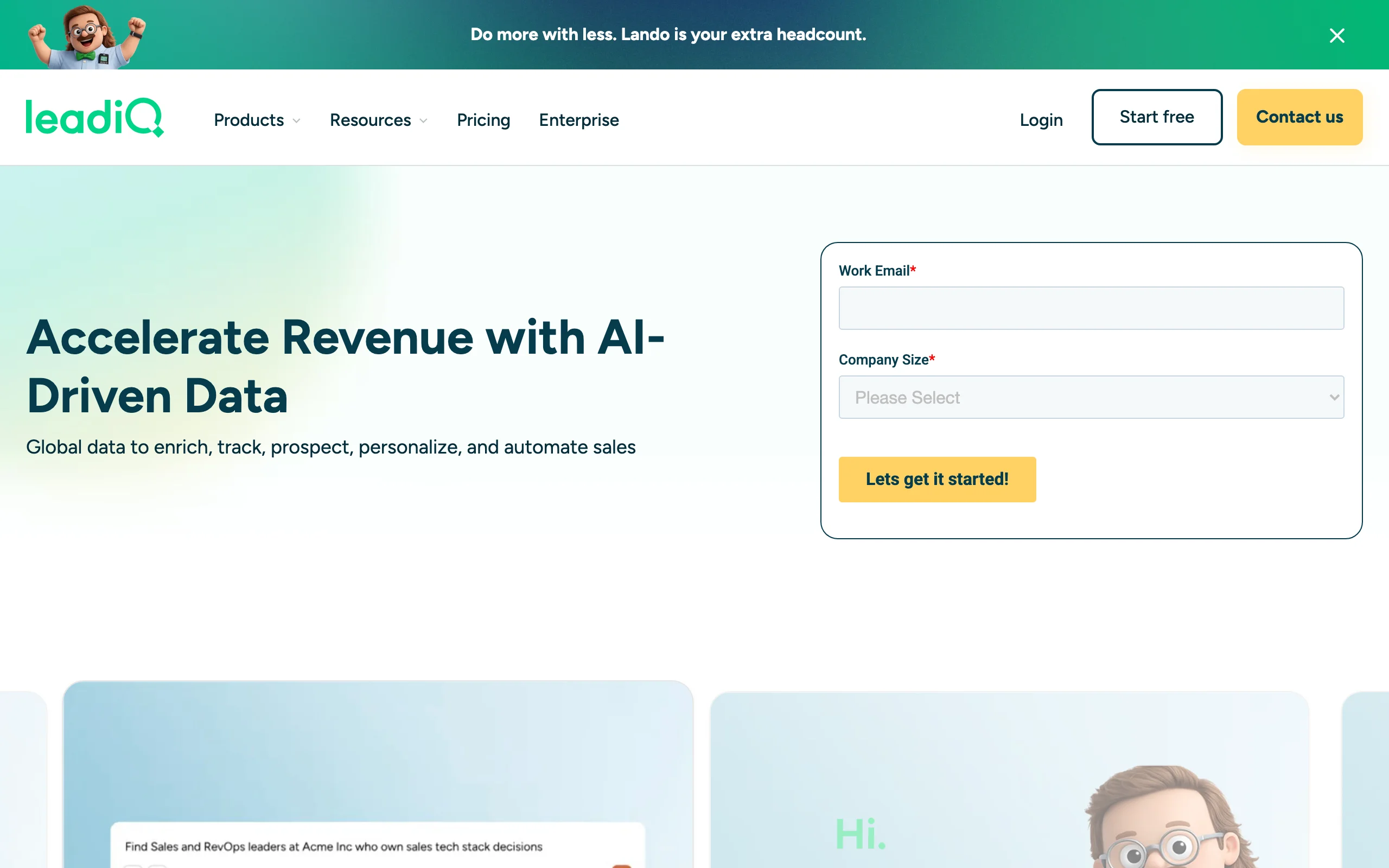
LeadIQ is primarily a contact-data and prospecting tool, a Chrome extension that captures emails and phone numbers from LinkedIn profiles, but it includes champion tracking that automatically flags when a saved contact changes roles so reps can reconnect with a past champion before a competitor does. That tracking only covers contacts already saved in your LeadIQ account; it does not scan your whole market for job changes the way a dedicated signal platform does.
For SDRs who are already using LeadIQ to find contact details while prospecting, the champion-tracking layer is a useful bonus on top of the core enrichment workflow rather than a reason to buy the tool on its own.
Key features:
- Chrome extension for capturing emails and phone numbers from LinkedIn profiles
- Champion tracking with job-change alerts on saved contacts
- Lando Agent combining CRM data with third-party intelligence for prospecting
- Native Salesforce managed package and HubSpot integration
- AI-assisted message drafting (Scribe)
Best for:
- SDRs who want contact enrichment and light job-change tracking in one Chrome extension
- Teams re-engaging former champions after they move to a new company
Pricing:
- Free plan: 50 credits/month, 1 user
- Pro plan from $200/month for up to 5 users
- Enterprise: custom pricing
Pros:
- Champion tracking is included, not a separate add-on purchase
- Chrome extension keeps prospecting and enrichment in the same workflow
- Free plan is usable enough to test the workflow before paying
Cons:
- Job-change tracking only covers contacts you have already saved, not your broader target market
- Primarily a contact-data tool; LinkedIn monitoring is a secondary feature, not the core product
9. Surfe, best for syncing LinkedIn signals straight into your CRM
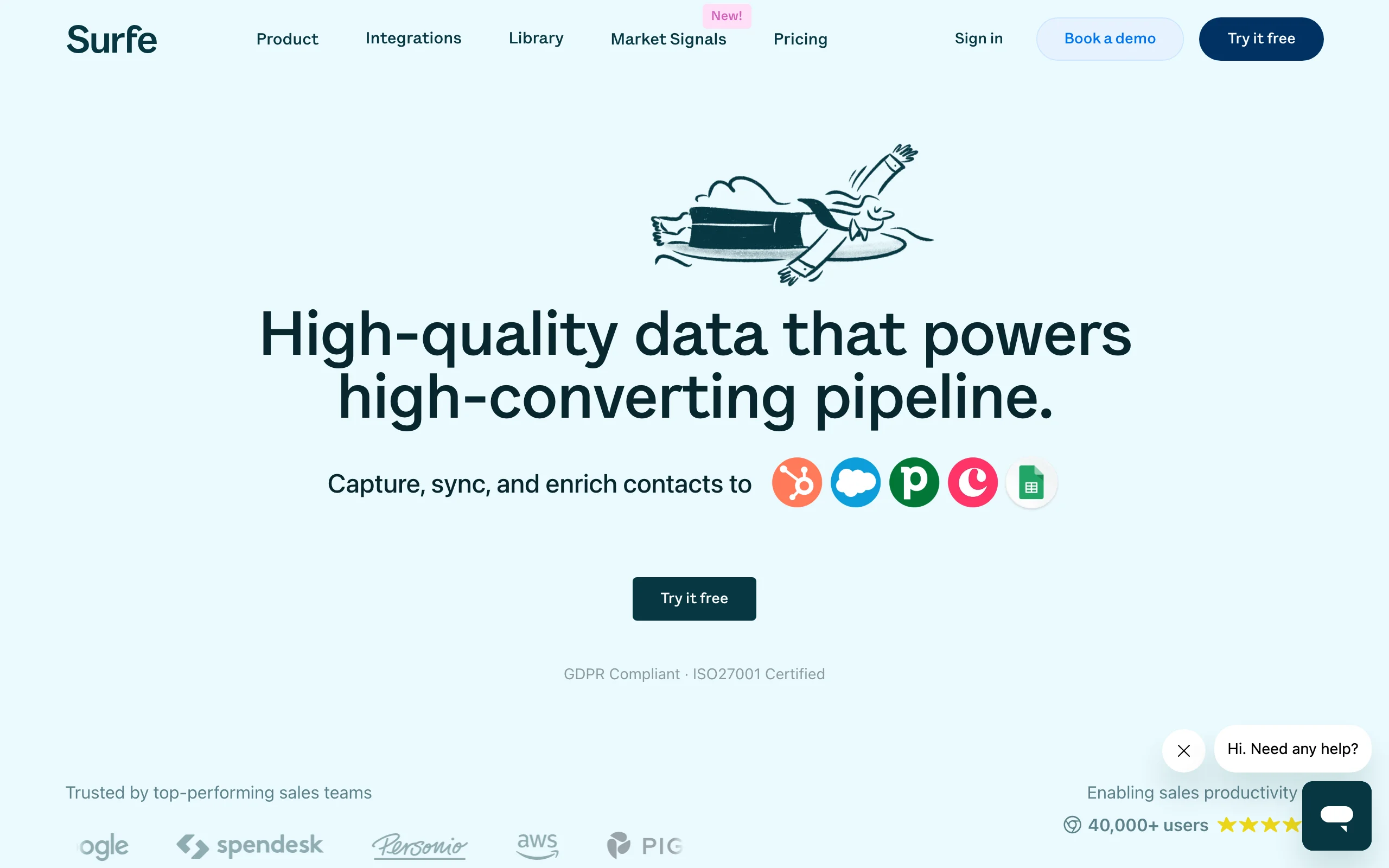
Surfe is a Chrome extension and companion web app built to capture LinkedIn profiles and sync them to your CRM in one click, using waterfall enrichment across 15+ data providers to fill in emails and phone numbers. Alongside enrichment, Surfe includes job-change alerts that notify you when a synced contact moves to a new company, keeping your CRM records current without a manual re-check.
Surfe's strength is how directly it ties LinkedIn activity to your existing CRM records in Salesforce, HubSpot, Pipedrive, or Copper. It is not a broad signal-detection platform; the monitoring layer exists to keep contact records accurate rather than to surface new opportunities across your whole market.
Key features:
- One-click LinkedIn profile capture synced to your CRM
- Job-change alerts on synced contacts
- Waterfall enrichment across 15+ data providers for emails and phone numbers
- Native integrations with Salesforce, HubSpot, Pipedrive, and Copper
- Account lookalike suggestions on the Pro plan
Best for:
- SDRs who live in LinkedIn and want every profile they touch to land cleanly in the CRM
- Teams standardizing contact data quality across Salesforce, HubSpot, Pipedrive, or Copper
Pricing:
- Free plan: 20 email credits and 5 phone credits per year
- Essential plan from $39/user/month
- Pro plan from $79/user/month (most popular)
Pros:
- Tight, low-friction CRM sync directly from the LinkedIn interface
- Job-change alerts keep existing CRM records from going stale
- Straightforward pricing with a usable free tier
Cons:
- Monitoring is scoped to contacts already in your CRM, not broader market signals
- Free tier's annual credit caps are thin for active daily prospecting
How to choose the best LinkedIn monitoring tool for your needs
Signal detection alone vs signal plus action
Some tools stop at the alert. Trigify, UserGems, and Sales Navigator tell you a signal fired; you still need a separate step, and often a separate tool, to decide what to say and send it. Others close the loop: Extrovert surfaces the signal and drafts the comment or DM in the same workflow, and LeadIQ and Surfe pair light monitoring with the contact-enrichment work reps already do.
If your team is small and can't afford to stitch together a detection tool and an outreach tool separately, a signal-plus-action tool cuts the integration work. If you already run a strong sequence or engagement motion, a dedicated detection layer like Trigify may slot in more cleanly on top of what you have.
Native LinkedIn data vs third-party aggregation
LinkedIn Sales Navigator and Extrovert work directly against LinkedIn's own data, so there is no scraping or compliance gray area to think about. Trigify, UserGems, Clay, RB2B, Common Room, LeadIQ, and Surfe combine LinkedIn signals with other sources or providers, which broadens coverage but adds a layer of third-party data sourcing to evaluate.
Neither approach is automatically better. Native tools give you certainty about where the data comes from; aggregation tools give you breadth a single-source tool cannot match. Match the choice to how much you value source transparency versus signal coverage.
Budget: SMB tools vs enterprise platforms
The price range across this list is wide. Extrovert starts at $29/seat/month, Trigify at $40/month, Surfe at $39/user/month, RB2B has a free plan with paid tiers from $79/month, and LeadIQ has a usable free plan. Move to UserGems or Common Room, and you're looking at $2,500 to $10,000+ a month before you send a single message. Sales Navigator and Clay sit in between, with per-seat or usage-based pricing that scales with your team.
For an individual SDR or a small pod without a dedicated RevOps budget, the SMB-tier tools on this list cover job changes, posts, and comment activity well. Enterprise platforms make sense once you're running coordinated ABM or champion programs across hundreds of accounts, or once you don't have the bandwidth to run monitoring yourself; done-for-you LinkedIn engagement is worth a look at that point too.
Our team runs your warm-outreach engagement so you stay visible daily without the manual work.
Explore done-for-youWhich signal type matches your motion
Different monitoring types support different plays:
- Job changes and champion re-engagement: UserGems, LeadIQ, Sales Navigator, Surfe
- Rule-based post and topic alerts: Trigify, Extrovert
- Account-level buying signals combined with outreach: Extrovert, Clay
- Community and product-usage signals alongside LinkedIn: Common Room
- Website visitor identification tied to a LinkedIn profile: RB2B
Start by identifying which signal type has actually preceded closed deals in your pipeline. That narrows this list fast and keeps you from paying for signal coverage your buyers don't generate. For a broader look at signal types beyond LinkedIn, see our guide to buying signal tools.
FAQ
What is LinkedIn monitoring?
LinkedIn monitoring is the practice of tracking specific prospects, accounts, or topics on LinkedIn so you're notified when something relevant happens: a job change, a post about a problem you solve, a comment thread worth joining, or company news. The goal is timing outreach to a moment when it's actually relevant, instead of sending the same message on a fixed schedule regardless of what's happening in a prospect's world.
What's the difference between LinkedIn monitoring and intent data?
LinkedIn monitoring tracks activity tied to a named, identified person or account on one platform. Broader intent data, the kind sold by platforms like Bombora or 6sense, is typically derived from anonymous web traffic and content consumption across many sites, and it often requires a separate step to identify the actual person behind the signal. LinkedIn signals tend to be more actionable because you already know who to contact; intent data casts a wider net but with less certainty about who to reach.
Can I monitor LinkedIn prospects for free?
Partially. LeadIQ, Surfe, and RB2B all have usable free plans that include limited monitoring, job-change alerts, or website-visitor resolutions. Clay's free tier includes some signal access at low volume. Extrovert and Trigify offer free trials (10 and 14 days respectively) rather than permanent free tiers. UserGems and Common Room, the enterprise platforms on this list, don't have a meaningful free option.
Do LinkedIn monitoring tools risk getting my account restricted?
It depends on how the tool acts on what it finds, not on the monitoring itself. Tools that require human review and approval before anything posts or sends, like Extrovert, keep a person in the loop on every action, which reduces the account risk that comes with unattended, fully automated sending. Tools that only detect signals and hand them to a rep, like Trigify or Sales Navigator, carry no sending risk at all since they don't act on your account.
What's the best LinkedIn monitoring tool for a small SDR team?
For a solo rep or a small team without a RevOps budget, Extrovert, Trigify, Surfe, and LeadIQ are priced for individual or small-team use and cover the most common monitoring needs: job changes, posts, and comment activity. Sales Navigator is worth adding if you also need LinkedIn's native list-building tools. The enterprise platforms on this list only make sense once you have the budget and volume to justify them.
Does LinkedIn Sales Navigator alone cover monitoring, or do I need another tool?
Sales Navigator covers native LinkedIn alerts and list building well, but it stops at the alert. It doesn't suggest what to say once a signal fires, and it doesn't track whether your outreach is actually building familiarity over time. Many teams pair Sales Navigator's data and list-building with a tool like Extrovert that handles the response side of the workflow.
How fast do job change alerts actually fire?
It varies by tool and depends on when the change appears on LinkedIn. Some tools, including UserGems and LeadIQ, can flag a change within hours to a few days of a profile update. The value of a fast alert is real: reaching out while someone is still in their first weeks at a new company, before their inbox fills up with vendor pitches, tends to land better than a message sent a month later.
Can I use multiple LinkedIn monitoring tools together?
Yes, and many teams do. A common combination: Sales Navigator for native list building and alerts, Extrovert for the monitoring-plus-engagement layer, and Clay or Surfe underneath for enrichment and CRM sync. The risk to manage is duplicate alerts on the same signal from different tools, which leads to redundant outreach and can annoy prospects who get contacted twice about the same event.
Which LinkedIn monitoring tools integrate with Salesforce or HubSpot?
Most do. Sales Navigator, UserGems, Clay, Common Room, LeadIQ, Surfe, and RB2B all have native Salesforce and HubSpot integrations. Extrovert and Trigify support CRM sync and webhook routing for teams that want signals or activity flowing into their existing system of record.